
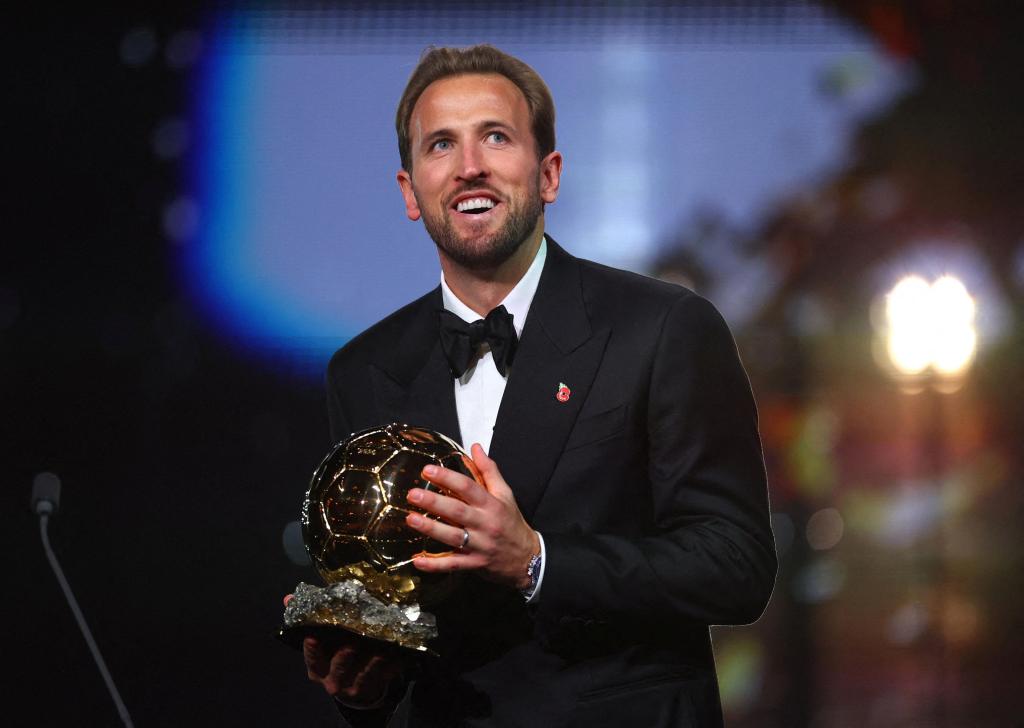
If you went back to 2024 and asked any football fan about Harry Kane, they’d tell you he’s cursed—a world-class striker who couldn’t touch a trophy. Despite ranking among the sport’s elite, his career was defined by agonizing near-misses: losing the Champions League final with Tottenham, falling short in back-to-back Euros finals with England, and watching Bayern Munich’s eleven-year Bundesliga dominance snap the moment he arrived in Germany. He had all the talent, but a stubborn reputation for being football’s ultimate second-place finisher and winning a ballon d’or seemed like a fantasy.
The Premier League: The Striker’s Time in England
Long before the world knew his name, Kane’s journey was a masterclass in grit. Rejected by Arsenal’s academy as a child and deemed too slow by early doubters, he spent his formative years grinding through lower-league loan spells at Leyton Orient, Millwall, Norwich City, and Leicester City. Many wrote him off as a journeyman before his career had truly begun.
Everything changed during his 2014–15 breakthrough at Tottenham Hotspur under Mauricio Pochettino. Kane evolved from a local academy graduate into a ruthless, complete number nine. Over the next decade in North London, he dismantled Premier League defenses, netting 213 league goals to become the competition’s second-highest all-time scorer and Tottenham’s undisputed record goalscorer with 280 goals for the club. He claimed three Premier League Golden Boots and even won the Playmaker Award in 2020–21, proving he was just as lethal threading a pass from deep as he was burying chances in the box. Yet, individual brilliance never translated into team trophies, leaving a glaring void in his career.
The Move: His First Season in Germany
In August 2023, at age 30, Kane made the agonizing decision to leave his boyhood club for Bayern Munich in a Bundesliga-record €110 million transfer. The logic was simple: Bayern guaranteed silverware and he wanted to be at the center of the race competing for major trophies, stating “I didn’t want to get to the end of my career with regrets at not experiencing different leagues and cultures.”
Instead, football delivered one of its cruelest ironies. Kane did everything asked of him in his 2023–24 debut campaign, firing in 36 Bundesliga goals and 44 across all competitions to claim his first European Golden Shoe. Yet, for the first time in over a decade, Bayern imploded. Xabi Alonso’s Bayer Leverkusen stormed to an unprecedented, unbeaten domestic league and cup double, leaving Kane trophyless once again. To critics, the “Kane curse” wasn’t just real—it was contagious.
He finally exorcised the personal demon in 2024–25 by lifting his first major trophy as Bayern reclaimed the Bundesliga crown, setting the stage for the greatest individual campaign of his life.
The Historic Season: 2025/26
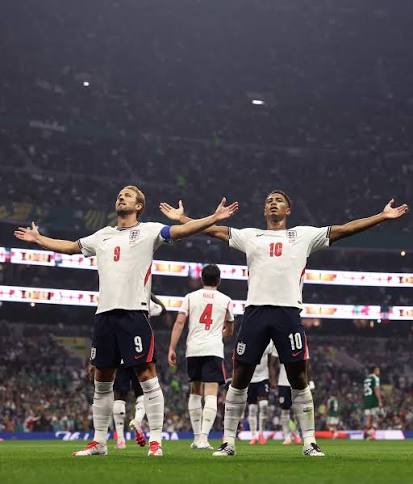
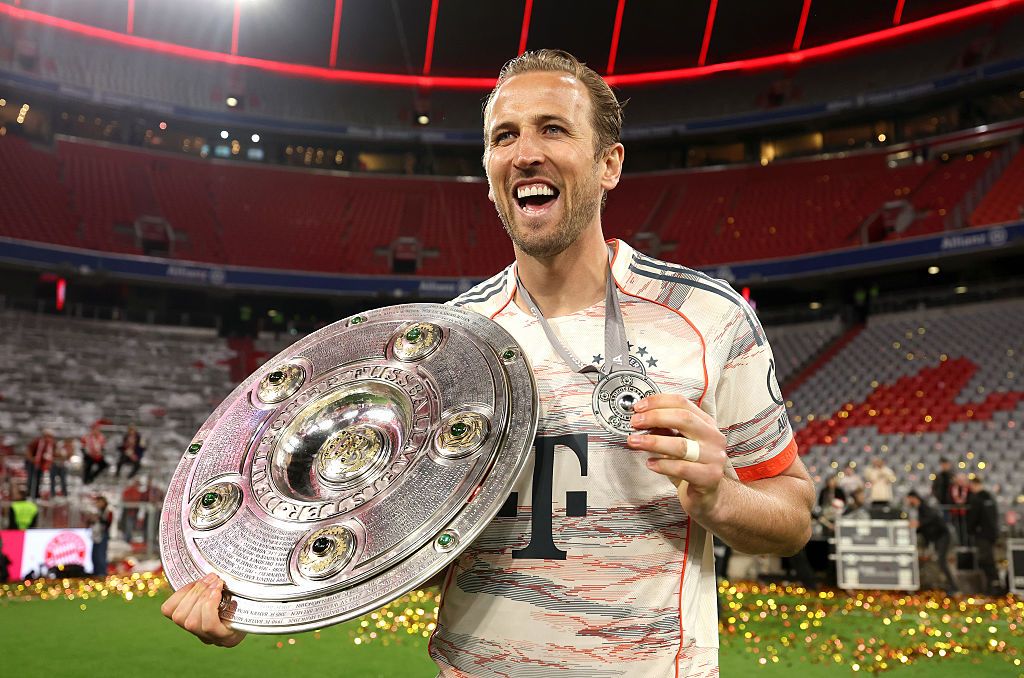
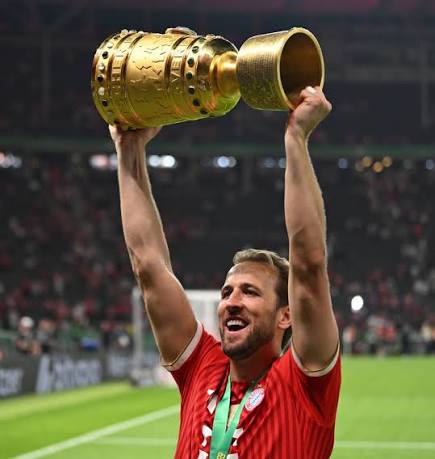
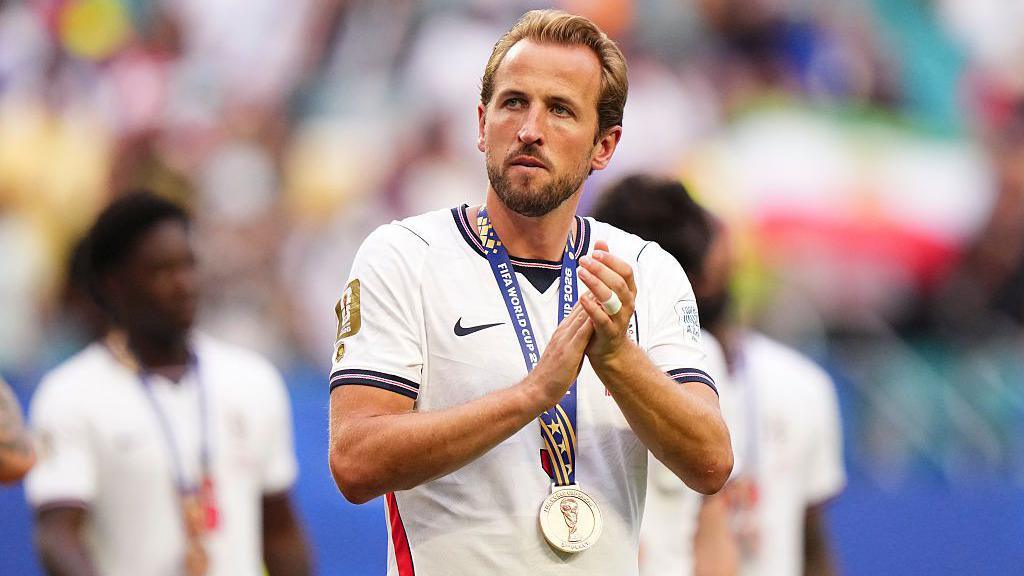
If 2024–25 broke the curse, the 2025–26 season obliterated it. Operating at the absolute peak of his powers, Kane put together a statistical campaign that belongs alongside the greatest single seasons of the 21st century. He finished the campaign with 73 goals and 8 assists in just 65 appearances for club and country—an astonishing 81 goal contributions trailing only Lionel Messi’s legendary 91-goal 2011–12 campaign in the modern era.
For Bayern Munich, he netted 61 goals in 51 games across all competitions, powering the Bavarians to a domestic treble of the Bundesliga, DFB-Pokal, and German Supercup. He scored 36 Bundesliga goals to capture his third straight Torjägerkanone and a second European Golden Shoe, becoming the fastest player in club history to reach 100 Bundesliga goals in just 98 matches. In the DFB-Pokal, his 10 goals—capped by a historic hat-trick in the final—marked the highest single-tournament tally in 49 years. On the European and international stage, Kane bagged 14 goals in the UEFA Champions League, equaling Cristiano Ronaldo’s record by scoring in six consecutive knockout-stage matches, and added 12 goals for England, including six at the 2026 FIFA World Cup to guide the Three Lions to a third-place finish.
Despite those historic numbers, his victory was far from crystallized during the lead-up to the ceremony. He was outshone by his own Bayern Munich teammate Michael Olise for Bundesliga Player of the Season, and the rest of his competition was equally as strong. Nineteen-year-old “golden boy” Lamine Yamal won three major trophies, including the World Cup. Kylian Mbappe had a record-breaking campaign and became the World Cup’s all-time leading goalscorer. And, one again, a 39 year-old Messi took the world’s biggest football tournament by storm in pursuit of a potential ninth Golden Ball.
Why This Year Means More
When Kane stepped onto the stage at London’s Palladium Theatre in October 26, 2026 to accept the Golden Ball, the triumph carried historic weight. Roughly 25 years after Michael Owen lifted the trophy in 2001, Kane ended a quarter-century drought to become the first Englishman—and first Bundesliga player since 1996—to be crowned the world’s best.
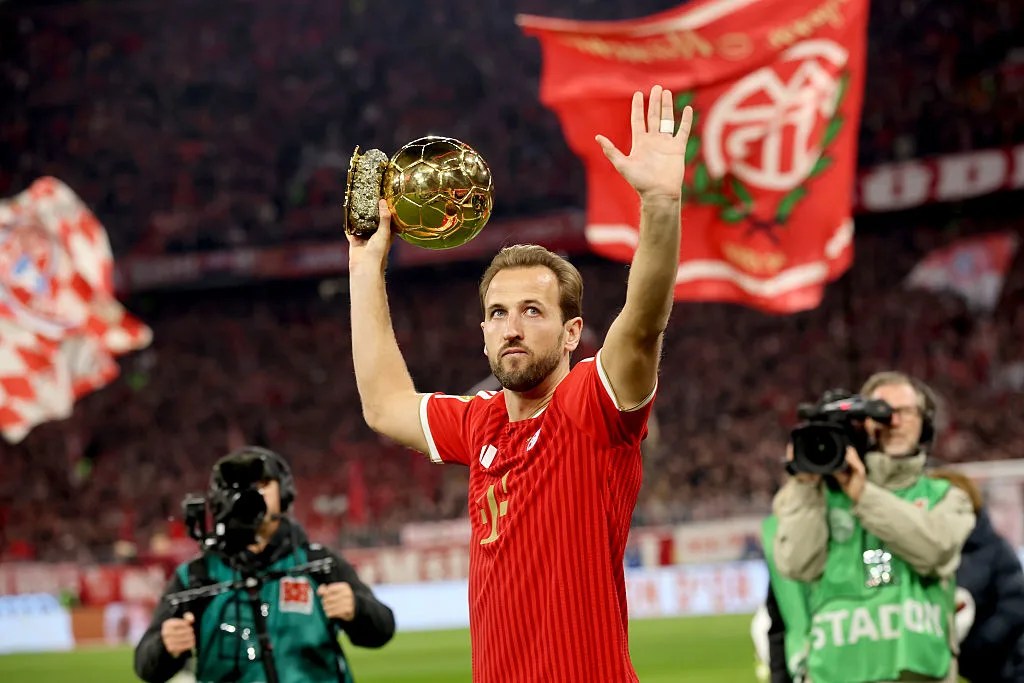
More importantly, his win signaled a fascinating shift in how football judges greatness. For decades, Ballon d’Or voters overwhelmingly favored big moments—the player who scored the winning goal in a Champions League final or hoisted the World Cup trophy, regardless of their broader body of work. In 2026, both Bayern Munich and England fell short in their respective Champions League and World Cup semifinals.
Yet, Kane’s sheer, week-in, week-out statistical dominance was impossible to ignore. Scoring in 47 different matches and never going more than two games without finding the net, he proved that relentless, historic consistency can outweigh a single knockout-round heartbreak. Taking a step back and looking at what he has accomplished, it is quite amazing. He is England’s all-time top scorer, he has won the most prestigious individual award in the sport, and he has finally got those elusive team trophies. So the final question is: where do you rank him among the greats?





Leave a Reply