

Kill Line
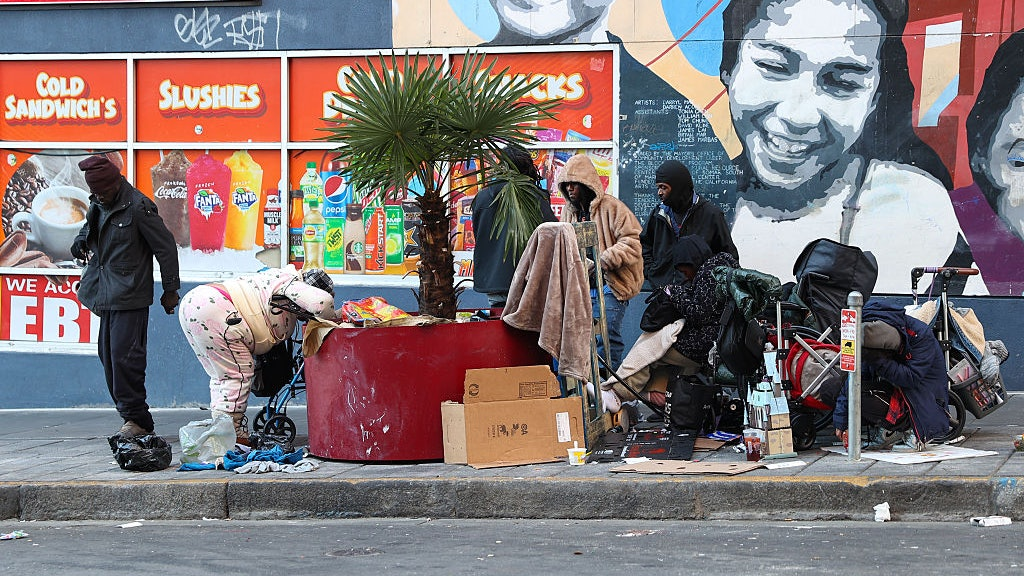
The Chinese Media has popularized the phrase “Kill-Line” this year and it has been widespread on the Chinese Internet. “Kill line”(斩杀线) originally comes from RPG and MOBA games. It means the point where a character’s health is so low that a specific skill or combo can defeat them instantly. When health drops below this line, the enemy is determined as semi-defeated, as its defeat is near inevitable.
This vivid image has recently transformed into a social terminology. Chinese netizens now use it to describe a level of asset or income needed to sustain middle class life, if one drops below this line, whether it is due to illness, job loss, etc. Life is effectively “wiped out”. In short, “Kill line” has become a term for the sudden tipping point into poverty after economic shock, the bare minimum for the inevitable economic domino chain.
For the Chinese and US media, the rising popularity of this term highlights the fragility of American middle class security. A family may appear financially stable: holding a job, paying their bill, living in a house, above the official poverty line. But one unexpected event can trigger a chain reaction, a heavy sickness, sudden job loss, a raise in rent, or a car repair. One exceeding expense pushes a household below its economic “kill line”. Recovery becomes extremely difficult. A single shock can set off a chain of consequences. Job loss can exhaust emergency savings, missed rent can threaten the stability of housing, and being homeless can make it hard to maintain employment and essential services. For the ironic cherry on top, if you need to file for food checks or poverty checks, an address is strictly necessary as they need to mail it to you. The ending is frustrating, but it’s not sudden, as it’s structurally inevitable.
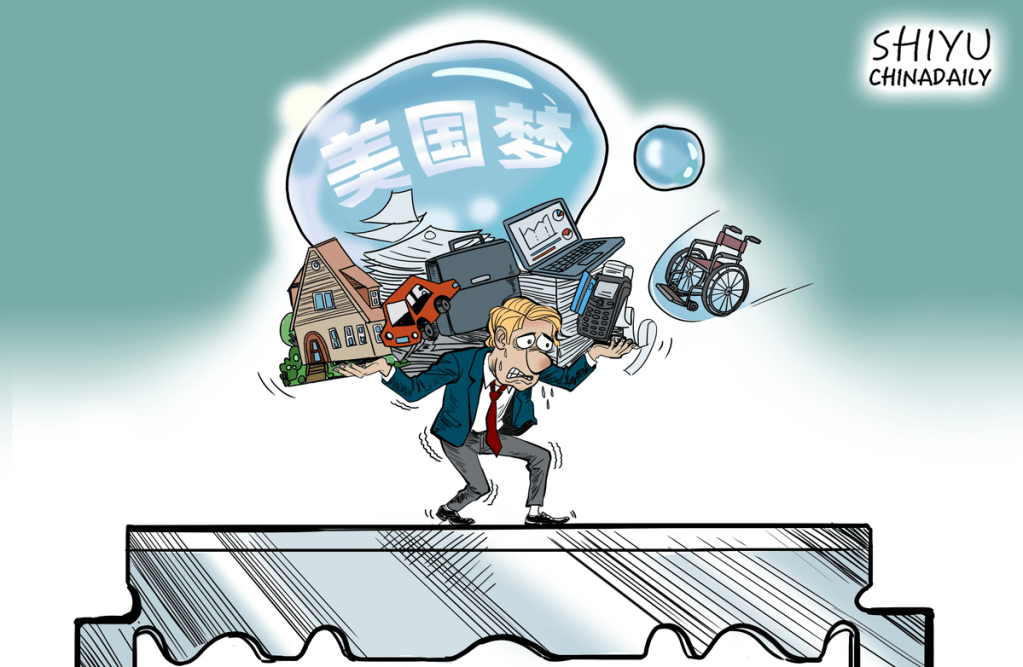
(Shiyu, China Daily)
Current poverty standards are incapable of capturing this state. In the US, the official poverty line identifies households with income too low to meet basic needs. Yet millions of families who earn slightly more than this line are struggling to afford housing, childcare, healthcare, and transportation.
This is known as ALICE: Asset Limited, Income Constrained, Employed. These families work, often full time, multiple jobs, yet lack enough savings or income to maintain their financial security.
Although the “Kill Line” has no official economic definition, existing financial indicators help illustrate the vulnerability it describes. According to data from the Bank of America Institute, “living from paycheck to paycheck” is defined for households that spend money on necessities more than 95% of household income. Under this line, 24% of all U.S. households in its 2025 analysis had very little savings for unexpected expenses.
- Among lower income households, that number jumps to 29%.
- The pressure is highest for Millennials and Gen X, who are navigating peak spending years amid housing inflation and rising childcare costs.
(Bank of America Institute)
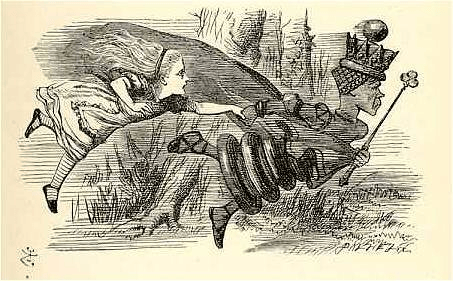
(Comic illustration, Lewis Carrol)
The popularity of the internet phrase raises a question between economic wellbeing and media narrative. While the phrase “kill line” captures genuine financial vulnerabilities in America’s society, it has only been circulating on Chinese social media. Its popularity encouraged Chinese netizens to compare the two countries’ economic systems. The metaphor should therefore be understood as a scope on financial insecurity rather than an actual economic measurement.
Running to stay still
Now why is it that these families are incapable of surviving no matter how hard they try? This concept is much easier when putting in the perspective of the Red Queen hypothesis. Proposed by Leigh Van Valen, this biology term states that a species must constantly adapt in order to survive because the environment and competing species are always evolving. This idea comes from the children’s book “Alice In Wonderland”. Where the Red Queen says it takes all the running you can do just to stay in the same place.
When applied to society, it describes a treadmill, merry-go-around. Workers have to keep earning and try even harder in order to keep up with the rising cost and competition. For many ALICE households, small wage increases and part time jobs are often offset by the expenses increase like rent and childcare, making economic progress feel like running in an infinitely spinning marathon of life.
The environment change is more visible through the raw data:
According to the Bank of America Institute, by October 2025, inflation rose by 3.0% while lower income wages grew by only 1.0% in October. Although these figures measure different periods, this 2% point gap destroys financial stability. Though these families are working at their maximum potential, the increase of living is chasing them even faster.
Conclusion
As we look toward the future for new generations, this “kill line” does not act as a cry for Armageddon, but as a subtle, urgent warning. It is a signal for the younger generations to reconcile the reality of our economic systems, as we are the ones who are going to live the “future”. The future for us new generations isn’t just to help people climb, but also to ensure that the floor they stand on doesn’t collapse the moment they stop moving. A society that has no margin for error is a system designed to fail. Instead of extending the ceiling over and over again, we need a floor that actually holds.
References
Bank of America Institute. (2025, November 10). Paycheck to paycheck: Slowing but growing. Bank of America. https://institute.bankofamerica.com/content/dam/economic-insights/paycheck-to-paycheck.pdf
Chetty, R., Grusky, D., Hell, M., Hendren, N., Manduca, R., & Narang, J. (2017). The fading American dream: Trends in absolute income mobility since 1940. Science, 356(6336), 398-406. https://www.science.org/doi/10.1126/science.aan3264
Healthcare.gov. (n.d.). Federal Poverty Level (FPL). U.S. Centers for Medicare & Medicaid Services. https://www.healthcare.gov/glossary/federal-poverty-level-fpl/
The Economist. (2026, January 12). China obsesses over America’s “kill line”. https://www.economist.com/china/2026/01/12/china-obsesses-over-americas-kill-line
United For ALICE. (2024). National Overview: Asset Limited, Income Constrained, Employed. https://www.unitedforalice.org/national-overview
Van Valen, L. (1973). A new evolutionary law. Evolutionary Theory, 1, 1-30. (Refenced via Wikipedia: “Red Queen hypothesis,” https://en.wikipedia.org/wiki/Red_Queen_hypothesis)








You must be logged in to post a comment.