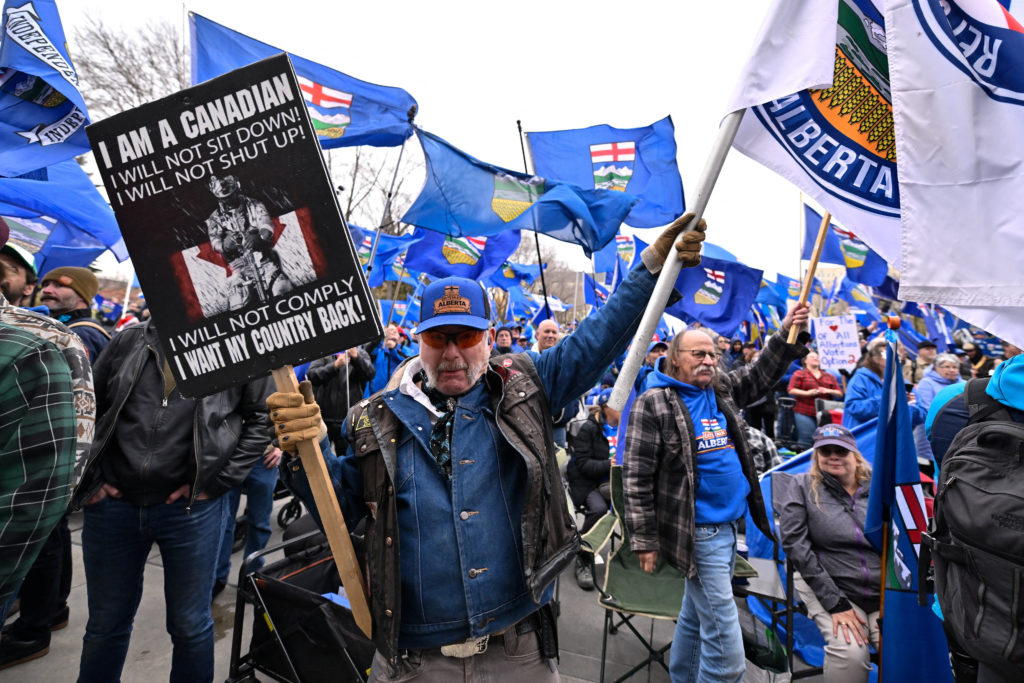
By now you would have heard the headline result of Alberta’s Referendum. Question 10, which was on separation. The result was clear, nearly 75% of electors voted to remain in Canada. However, what is less clear is how Alberta’s future looks like within Canada, and how those in Ottawa will approach it, with every single question on Immigration (1-5) passing.
In the explainer video for the referendum questions on immigration, the Alberta government makes its case:
The Alberta government views immigration as a tool that should be primarily utilized to grow the economy long term. Sustainable immigration levels, it says were achieved and maintained up until 2015, when Prime Minister Trudeau came to power. Pre-Trudeau, the number of non-permanent residents (NPR) was 765,000. By late 2024 it had ballooned to over 3 million. Due to this “unsustainable growth”, Alberta’s taxpayers were forced to “pick up the bill”. In 2025, this cost the Albertan taxpayer an estimated 1 billion dollars. Alberta’s youth unemployment rate was 15.6%, which the government claims is because tens of thousands of entry level positions “have been filled by temporary workers who aren’t here long term”. To address these challenges, the government brought forward the following questions:
Do you support the Government of Alberta taking increased control over immigration for the purposes of decreasing immigration to more sustainable levels, prioritizing economic migration and giving Albertans first priority on new employment opportunities?
Do you support the Government of Alberta introducing a law mandating that only Canadian citizens, permanent residents and individuals with an Alberta-approved immigration status will be eligible for provincially-funded programs, such as health care, education and other social services?
Assuming that all Canadian citizens and permanent residents continue to qualify for social support programs as they do now, do you support the Government of Alberta introducing a law requiring all individuals with a non-permanent legal immigration status to reside in Alberta for at least 12 months before qualifying for any provincially-funded social support programs?
Assuming that all Canadian citizens and permanent residents continue to qualify for public health care and education as they do now, do you support the Government of Alberta charging a reasonable fee or premium to individuals with a non-permanent immigration status living in Alberta for their and their family’s use of the health care and education systems?
Do you support the Government of Alberta introducing a law requiring individuals to provide proof of citizenship, such as a passport, birth certificate or citizenship card, to vote in an Alberta provincial election?
The passage of all 5 of these questions by the Alberta electorate will mark a turning point in its relations with Ottawa. In the Canadian Constitution, Section 95 calls for a sharing of responsibility on Immigration between the federal and provincial governments. Question 1 asks for “increased control” which the province sees as a return to the Pre-Trudeau norm of “sustainable levels”, and which would require negotiation with Ottawa. Additionally, Questions 2-4, which call for a fundamentally different relationship with social services for NPRs will certainly face backlash under the Charter’s equality provisions. Although the man in the Prime Minister’s Office (PMO) has changed (and to his credit, has been more willing to play ball with Alberta), there remains a deep distrust between the province and the Liberals in power. This referendum provides the party an opportunity to reset its relations with Alberta. If the party were to wholeheartedly endorse the proposed changes that were passed under the referendum, it would certainly curry favour in a deeply blue province. However, it would also further unsettle the parties left-wing faction, which had already voiced disapproval of the PMO’s move towards Alberta, with Steven Guilbeault’s resignation from Cabinet.
Albertans voted to stay in Canada and, on the same ballot, for a Canada in which their province has more say over who arrives and what they receive. But a referendum result is a mandate, not a power: Question 1 requires negotiation with Ottawa, Questions 2 to 4 face Charter challenges, and only Question 5 stands on firm ground. For the Liberals, embracing the results could repair relations with Alberta but would deepen divisions within their own caucus, while resisting them risks confirming the grievance behind the vote. How Ottawa responds will show whether Canadian federalism can absorb demands for autonomy without strain.