
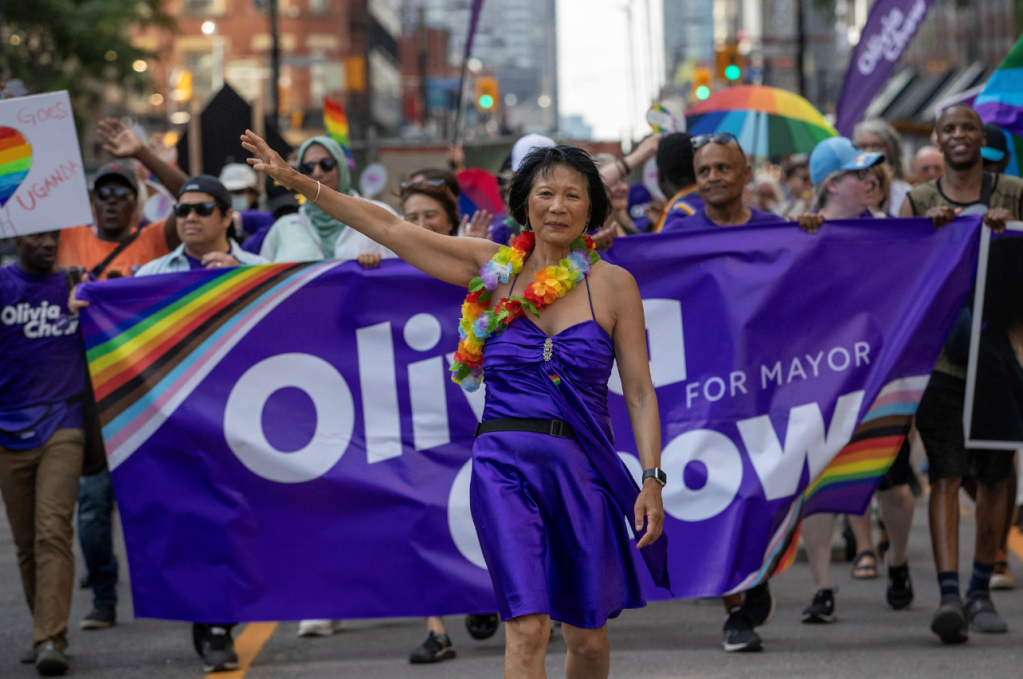
What happens when salaries barely budge, but housing costs skyrocket? As the average annual home prices peaked around $1.2 million in 2022, Toronto’s price-to-income ratio surged from 9.9x in 2015 to a peak of over 13x. Even after cooling to roughly 10.5x in 2026, it remains nearly triple the 3–4x range economists consider affordable. With such a massive disparity between incomes and property prices, finding an affordable place to live in Toronto can feel like winning the lottery. Now that Olivia Chow has been re-elected in the 2026 municipal election, one major concern persists: will Toronto’s housing affordability actually improve? To answer that, voters have to look closely at her past track record.

In Mayor Chow’s first term, council passed the “Toronto Builds” framework, which kept public land in public hands and mandated new developments on city-owned land to include affordable housing units. While the city approved about 30,000 rent-controlled homes, their construction has remained relatively slow—only 632 new affordable units were completed while 999 had started in 2024. Even though Toronto is now 80% faster at approving new housing, such approvals don’t convert to housing immediately. In her second term, Mayor Chow has promised to start constructing 10,000 new rental homes in 2027, with at least 20% of these being affordable housing, as part of a broader goal of building 65,000 new homes by 2030.
Moreover, the Chow administration pointed out that the number of visible park encampments dropped significantly from 539 locations in late 2024 to 196 locations in late 2025, a 64% decrease. In 2025, the city had successfully moved more than 4,400 people living outdoors or in shelters into permanent housing. Nonetheless, the October 2025 Street Needs Assessment still reported that about 12,000 people are experiencing homelessness in Toronto, with about 1,400 people still living outdoors. Therefore, while progress has been made on visible encampments and permanent housing, the homelessness crisis is still far from being resolved. Looking ahead, Mayor Chow has committed to adding 1,533 shelter and housing spaces from November 15, 2026, to April 15, 2027, representing an 18% increase in shelter capacity compared to the previous year.
But as Chow put it herself: “No waiting around. Because families cannot put their lives on hold.” While the goals set by the Chow administration are compassionate, there is still a gap between lofty promises and daily reality, as the crisis is far from being completely addressed. Over the next four years, Torontonians won’t just be grading her promises, but will be forced to live with the results. The true test is whether the next generation can afford to build a life in this city, or be left stuck on a waitlist.







Leave a Reply