
While most of us here at UCC are too young to vote, it is important to keep in mind that City Hall decides how we live our lives: how we get to school, whether public services stay open, and the water that we drink.
The Candidates
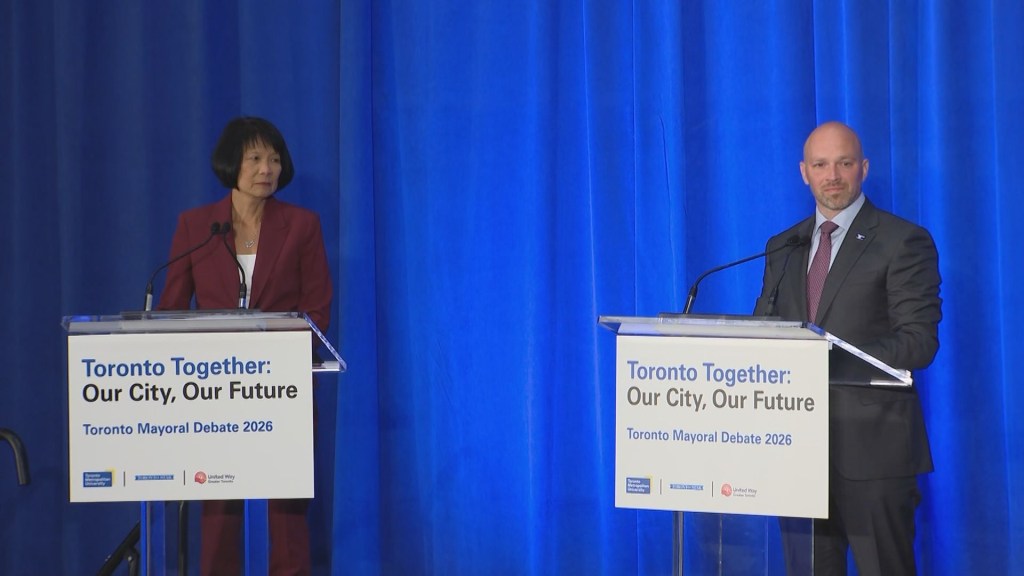
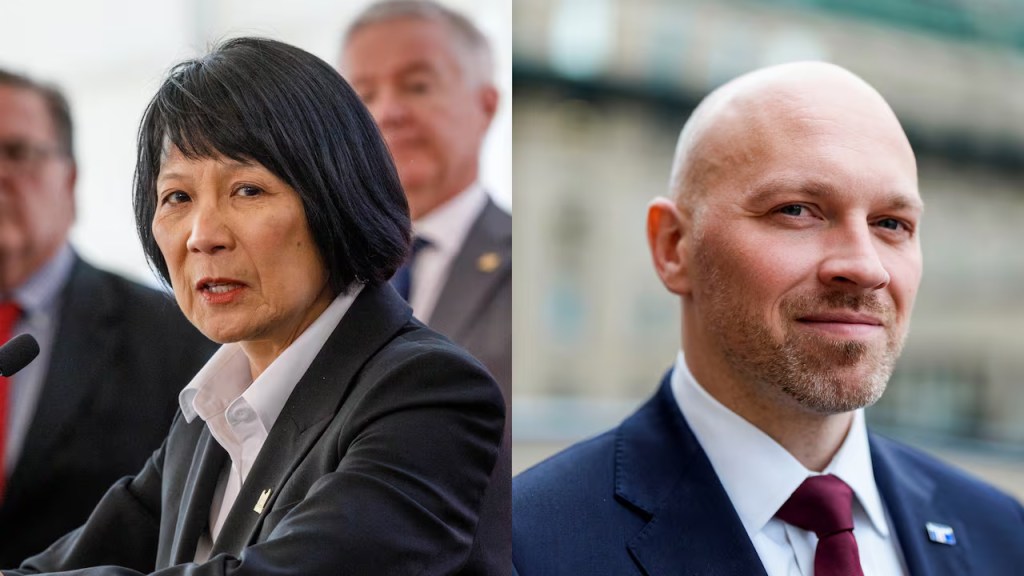
The race has narrowed down to two candidates: incumbent mayor Olivia Chow and former city councillor Brad Bradford. As a former NDP Member of Parliament, she was elected mayor in 2023 as a result of the by-election prompted by John Tory’s resignation. She became the first person of Asian descent to lead the city, and the first woman since Toronto’s six municipalities merged in 1998. She registered for re-election on May 25.
The main challenger is Brad Bradford, who has represented Beaches-East York (Ward 19) on city council since 2018. He gave up his council seat to run for mayor. He also ran in the 2023 by-election, when he finished far behind the leaders. He has positioned himself as the right-leaning candidate in this election, opposing Chow’s left-leaning campaign. Even though there are 16 people registered on the ballot, the mayoral race is mainly between these two candidates.
Policy Differences
Much of the individual campaigns are focused on the municipal budget and sources of income. Chow raised property taxes sharply in her first two years: 9.5% in 2024 and 6.5% in 2025. She cut the increase to 2.2 per cent for 2026, arguing that those earlier decisions made a smaller one possible. This naturally makes her less popular with homeowners than her competition, but more popular among renters. Bradford has claimed he wants to stop moving money from the budget to pre-fund future capital projects, pointing out that the federal and Ontario governments no longer do this. He says the change would pay for a cut to the land transfer tax and lower water bills by about $300 a year. Chow’s campaign calls his roughly $6 billion in promises reckless and warns they could increase the city’s debt and put public services at risk.
Regarding the issue of Toronto’s water, Bradford has proposed making Toronto Water a public utility, which Chow fundamentally opposes. Chow suggests this could open the door to provincial control of the system, conveniently using premier Doug Ford’s involvement with the removal of certain bike lanes in Toronto as an example. Bradford says that will never happen and that he opposes privatization. Transit has also become a point of debate, especially in Scarborough. Bradford says the Eglinton East LRT would be his top transit priority and accuses Chow of failing to advance the long-promised project in his home ward. Bradford has also criticized transit safety, linking it to the current cost-of-living crisis and its impact on the homeless population.
How close is the Race?
Nanos Polls (CP24) depicts a lead for Olivia Chow, but the margin seems to be shrinking. After resting around the low double digits until September, Bradford has closed the gap to just 3.5 percentage points, likely as a result of former Conservative MP Chris Alexander’s decision to drop out of the race uniting the right-leaning voters. A recent poll by Liaison also demonstrated that Bradford was 5 points more popular among homeowners than Chow, and that Chow was more popular among renters by 17 points. However, what is certain is that this election will be decided by turnout due to the narrowing gap between the two leading candidates. If you can vote, go out there and exercise your democratic right, and if you can’t, encourage others to do so. While municipal elections often see lower turnouts than federal or provincial elections, they are often the decisions that can impact our day-to-day lives the most.
Sources: CP24/CTV News, CBC, Global News, NOW Toronto, The Canadian Press, City of Toronto election site.





You must be logged in to post a comment.