
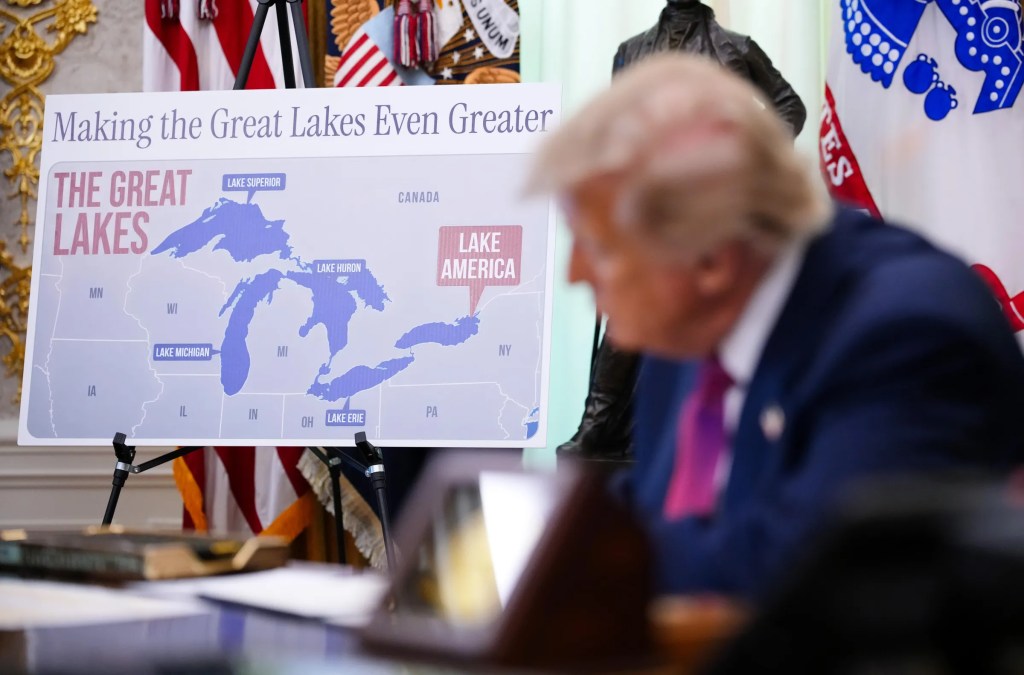
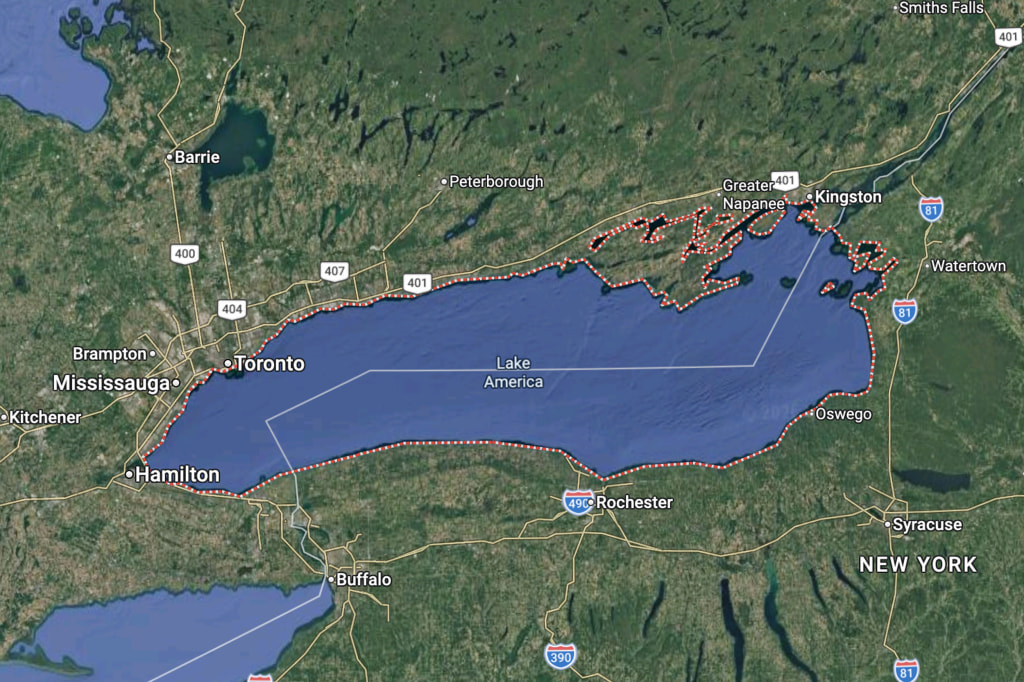
Open Google Maps in Toronto and you will see one name printed across the cerulean water. Open it in New York and you’ll see another. The map in your pocket calls the same body of water by a completely different name depending on where you are standing. This isn’t an algorithmic glitch in the system or a mapping error, but the direct fallout of an escalating trade dispute between the United States and Canada. The collapse of bilateral trade negotiations was fueled by Trump’s 50% U.S. tariff on Canadian imports like steel, which subsequently triggered Carney’s sharp retaliatory tariffs from Ottawa and dragged Lake Ontario’s name into the crossfire.
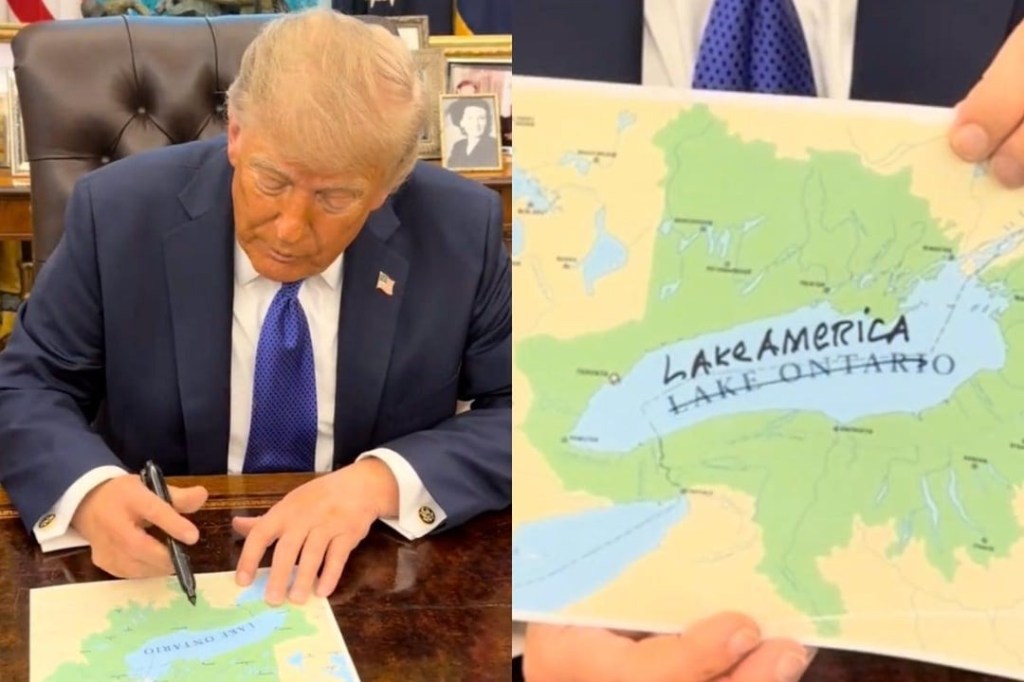
On August 27, 2026, Trump signed an executive order renaming Lake Ontario to “Lake America.” Surrounded by Great Lakes nautical charts, he used a black Sharpie to cross out Lake Ontario and write America over it, sparking widespread public debate at the president’s mockery. But Lake Ontario wasn’t the first body of water targeted for renaming by Trump. In January 2025, the Gulf of Mexico’s name dating back to the 1550s was rebranded into the Gulf of America across U.S. federal databases. Trump justified the change as an assertion of American ownership and investment, pointing to the region’s massive American maritime trade, commercial fishing infrastructure, and offshore drilling potential as proof of an inherent right to claim the name. Federal agencies were forced to update official government publications, while tech giants like Google and Apple Maps were pressured to adjust their software for domestic users, cementing this fragmented digital reality.
Now, Trump is using the same formula against Canada to further his “America First” agenda in his campaign to “make the Great Lakes even greater.” Mirroring the same train of logic used for the Gulf of Mexico, he argued that U.S. taxpayers heavily subsidize regional infrastructure. He noted that the U.S. operates 9 of the 11 Coast Guard icebreakers keeping Great Lakes shipping lanes open and has spent nearly $4 billion over a decade on Great Lakes restoration, claiming the U.S. was essentially “giving away our great waters for free” and declaring Washington “the greatest protector of the Great Lakes.” While some may question whether a name change is worth so much commotion, it serves as a direct proxy for sovereignty and pervasiveness of geopolitical reach, and a direct signal on who holds national authority and controls bilateral narratives. But even with Trump’s penchant for “toponymic narcissism,” his ability to control what appears on maps and public perception can only go so far. Trump’s executive order only binds the U.S. executive branch and Geographic Names Information System (GNIS) to update domestic databases, with no legal power to override Canada, the United Nations, or international nautical charting bodies.
No executive order can take away Lake Ontario’s entrenched roots in Canadian history. Although the White House and administration aides claimed the lake’s deepest waters and largest volume lie within U.S. territory, 52% of its surface area is grounded in Canadian sovereign territory. Furthermore, the lake’s name predates both the United States and Canada. Derived from the Haudenosaunee and Huron-Wendat words for “lake of shining waters,” “Ontario” has appeared on European and North American maps since the 17th century with no way to erase that reality. Even though half of Lake Ontario borders New York State, local residents and businesses in Oswego County of upstate New York have already pushed back against Trump’s toponymism, rejecting the decision as an attempt at cultural erasure of the region’s historic identity.

After signing the Lake Ontario order, Trump joked: “We have a gulf, and we have a lake. Now, all we need is an ocean.” But Canadian pushback has been firm, and the swift domestic backlash suggests it’ll be more onerous than he thinks to claim the Pacific, let alone Lake Ontario. From Ontario Premier Doug Ford unveiling a massive “Lake Ontario: Now and Always” shoreline billboard to MapQuest surging to #1 in the App Store by refusing to change the label, opposition has been widespread and adamant. Whether Canadians retaliate by calling an Americano a “Canadiano” (courtesy of Mr. Paschalidis) or a politician’s attempt to rename Lake Erie into Lake “Pennsylvania,” Lake Ontario is here to stay—regardless of what Trump writes with his Sharpie.









You must be logged in to post a comment.