Following the Cold War, global politics has for an extensive amount of time revolved around unipolar economic order and economic governance led by the Western world. Global production, trade, and investment flows have been shaped by certain wealthy nations and institutions, and an evident global economic hierarchy was present and stable. However, as the world entered the 21st century, with the rise of a multipolar global order, this trend showed signals of fragmentation. Supply shocks, intensified competition of industrial policies, and the rise of the concept of economic security have undermined the prior globalization model, and the global economic structure is being reshaped.
These changes aren’t simply intensifying competition among existing global superpowers like the United States and China. New economic environments such as nearshoring and supply chain reconfigurations are providing new opportunities for certain countries. Changing global economic order does not uniformly impact all states, yet instead creates a structural opportunity for certain states to solidify their economic security in a growingly multipolar world.
Fragmentation of Global Economic Order:
21st century global economic order is alienating itself from globalization, in which states prioritized production and trade based on factors such as cost minimization. Rather, the modern economic order is moving towards fragmentation, where factors such as geopolitical circumstances and risks of supply chains are becoming primary considerations. For example, during the trade war between the United States and China that took place in 2018, average reciprocal tariffs substantially rose. This directly impacted how global corporations organized their cost structures and shaped their production strategies. Additionally, the catastrophic COVID-19 pandemic resulted in shortages of medical supplies, semiconductors, and car parts, clearly demonstrating the weaknesses of long-distance supply chains. UNCTAD reported that in 2022, the global foreign direct investment (FDI) flows decreased by 12% compared to the previous year while at the same time, new investment on multinational production networks have decreased. In reaction to these new trends, multinational corporations have been expanding a ‘China-plus-one’ strategy, where corporations are increasingly dispersing their production bases into different regions rather than fully relying on China, where a vast number of corporations traditionally invested in for low-cost, efficient production. These global trends clearly indicate that the global economy no longer functions as one integrated system, but rather networks organized regionally.
Mexico’s Rise:
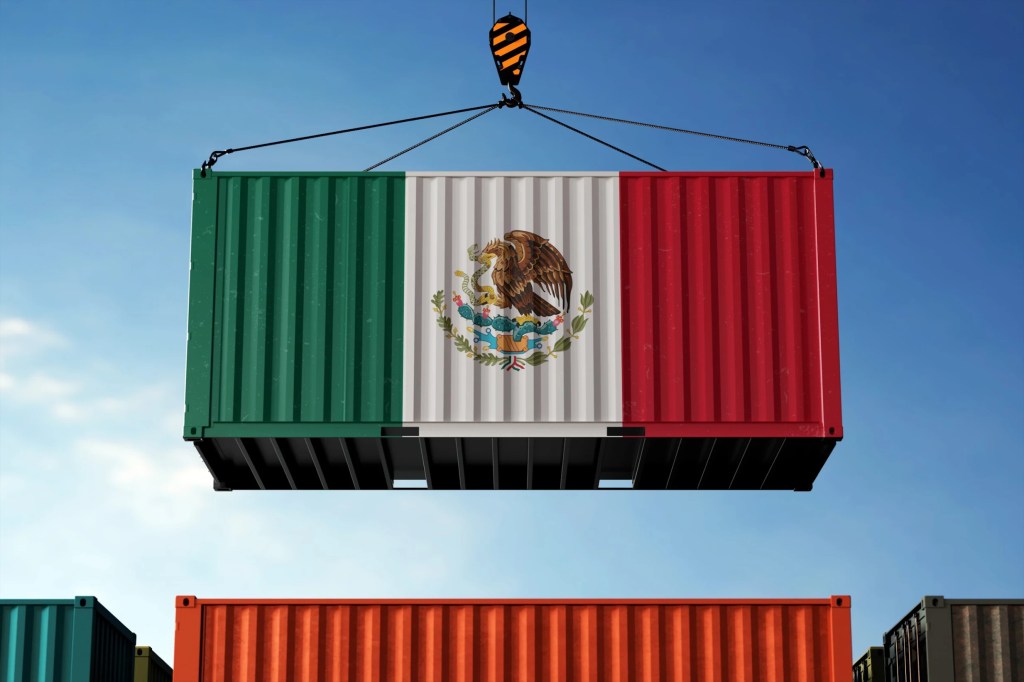
As trends of fragmentation in global economic order and nearshoring continue to accelerate, Mexico rose as one of the states that most efficiently transformed its structural circumstances to its advantage. In 2023, Mexico became the United States’ largest trading partner. The volume of bilateral trade between the two countries recorded approximately $798 billion, and Mexico overtook China’s position as the United States’ largest trade partner. This was not a short-term transition, but was a symbolic event that indicated that North America’s production network was reshaping under the United States–Mexico–Canada Agreement (USMCA). According to reports from UNCTAD, throughout 2022 to 2023, FDI flows into Mexico increased, especially in the fields of automobiles, electronics, and electric vehicle batteries. New investments from American corporations also sharply rose. For instance, in 2023, Tesla announced the construction of a large scale electric vehicle factory in Nuevo León, Mexico, solidifying its strategy to relocate its production bases that target the North American market to Mexico. These investments are not merely for the sake of saving money, but also had the purposes of simultaneously circumventing tariffs, secure logistics shortening, and to also maintain regulation consistency. As a result, Mexico was able to get rid of its historic reputation as a hub for cheap production, and transformed into an irreplaceable manufacturing hub for the North American supply chain. The rise of Mexico isn’t rooted in a shift in their diplomatic strategies, but rather from the acquisition of structural centrality in a changing global economic order where production and investment are concentrated.
Political Leverage:
Mexico’s emergence as the new manufacturing hub does not simply mean a mere growth in its international trade engagements and its manufacturing industry. As Mexico’s structural centrality strengthens in the global production network, its growing economic importance also translates into an increase in its influence in global politics. As Mexico’s role in the North American supply chain expanded, the United States and multinational corporations have inevitably grown more sensitive towards Mexico’s stability of regulations, labor policies, and the capacity of its infrastructure, as domestic struggles in Mexico would severely impact the North American supply chain as a whole. Mexico is responsible for around 25% of total automobile production in North America as of 2023 and also plays a central role in the North American electric vehicle and battery industry. In such a structure, Mexico is no longer a ‘rule taker’, but rather a ‘rule influencer’ that can exert negotiating power over fields such as regulations, standards of labor, and trade rules. Important to note is that this influential power comes not from the utilization of hard power or hegemonic diplomacy, but rather as a result of the dependency created due to changing global economic order. Mexico did not attempt to replace global superpowers and lead global order. However, by securing its position as an irreplaceable manufacturing hub in the current fragmented global economy, Mexico has solidified its status as an emerging power.
Conclusion:
The case of Mexico is crystal clear evidence that in modern global politics, states no longer survive in chaotic multipolar order through the usage of hard power and military conflicts, but instead from efficient economic positioning in the shifting international economic landscape. Throughout the process in which globalization has fragmented into regional production networks, states that secure important roles in such networks, such as Mexico, are capable of gaining geopolitical influence despite the fact that their conventional power metrics such as military strengh, might trail. By successfully acquiring such a crucial role in the North American supply chain, Mexico solidifies its economic security and distances itself from the events of catastrophic economic coercion in a multipolar world.