
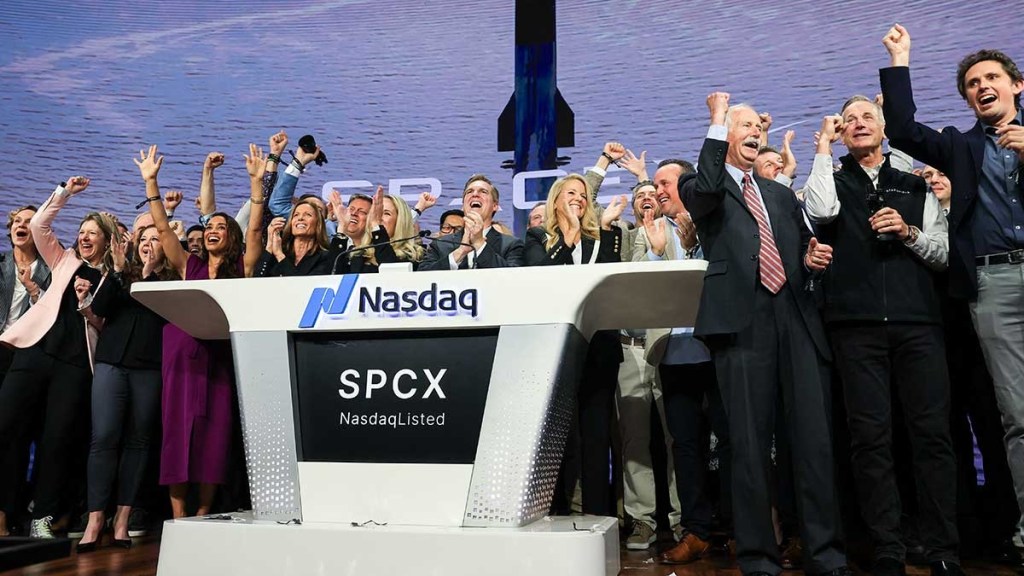
Following the early 2026 acquisitions of xAI and Cursor, SpaceX, also known as Space Exploration Technologies Corp, went public on June 12, 2026, as SPCX on Nasdaq. They achieved the largest initial public offering ever, at $135 per share for a staggering market valuation of $1.77 trillion. Many investors took this opportunity to make significant trades, with BlackRock buying more than $5 billion worth of shares.

Founded in 2002, SpaceX is now known for building reusable rockets, with the goal of lowering the cost of space travel. In 2015, the first rocket booster was successfully landed, making the vehicle reusable. Then, the mechanical Chopsticks system (also known as Mechazilla) was developed in 2024 to catch the Starship Super Heavy boosters in mid-air. In turn, SpaceX hopes to send an armada of Starlink satellites into Low Earth Orbit (LEO) to provide consistent internet connectivity, and in the future, build a base on the moon and send humans to Mars.
From May to July in 2026, SpaceX signed over $8 billion worth of deals with the U.S. Space Force to build a communications network in space, develop threat-detection satellites, and gain launch orders. SpaceX’s compute sector has also recently garnered attention, with both Anthropic and Google Cloud signing deals to use SpaceX’s compute power.
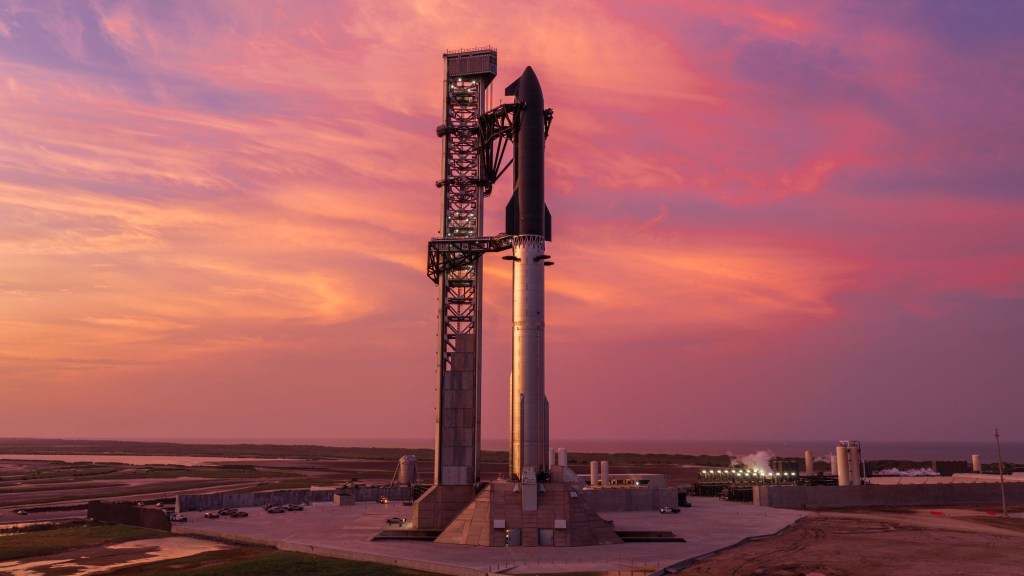
An IPO, or an initial public offering, occurs when a private company sells shares to the public. This is usually done to raise money or gain publicity, which can then fund future projects and grow the company. Within a week of going public, SPCX stock surged over $200 a share. However, after options trading and short selling began and the August spending report of $18.4 billion was published, these massive investments in AI infrastructure and Starship provoked uncertainty about buying a tech stock, so it almost briefly crashed to $100 a share. However, it has since stabilized a bit, and has recovered above the IPO stock price.
Looking at the official S-1 form filing, we can gain insights into the market. First, SpaceX reported $18.674 billion of revenue in 2025, but $23.611 billion in spending that same year. This implies that even though SpaceX has immense earnings, it is choosing to prioritize long-term development in its Starship and AI sectors rather than profit. This poses high risks to investors, since the failures of these programs could financially destabilize the company. Interestingly, $11.387 billion of revenue was from the Starlink satellite internet network, driven by a surge of subscribers going from 4.4 million in 2024 to 8.9 million in 2025. Investors must ultimately make their own decisions, since SpaceX is naturally a volatile option as a tech stock. Now, eyes turn toward Anthropic in the upcoming months, whose IPO valuation is expected to eclipse SpaceX’s record.









You must be logged in to post a comment.