
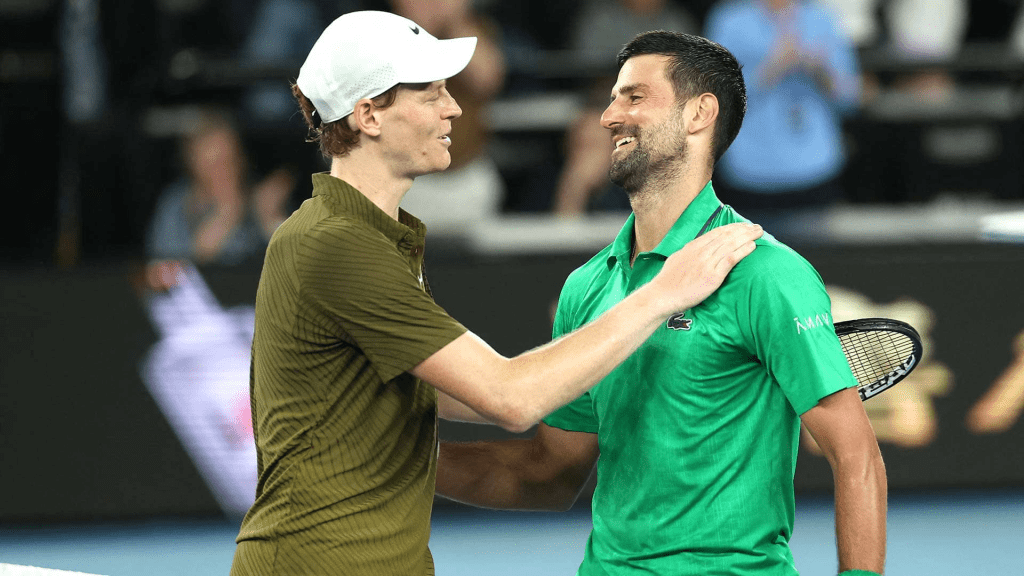
On February 1, 2026, the first Grand Slam of the year concluded with Carlos Alcaraz’s history-making victory to become the youngest winner of the Career Grand Slam, at just 22 years and 8 months old. However, this Australian Open wasn’t just about the winners. There were also many other stories, tennis or not, under the surface. I picked six of the stories I thought were most interesting that recap this Australian Open.
Sports is Politics

As Oleksandra Oliynykova would like to remind us with her T-shirt, the war in Ukraine is still going on. She continues to train in Ukraine with bombs flying over her head and has no coach sitting in the stands, because her father, who is her coach, is a volunteer in the Ukrainian army. Along with other Ukrainian players, she has refused to shake hands with all Russian and Belarusian players, as is usually customary in tennis. She has also accused Mirra Andreeva, Diana Shnaider, and Aryna Sabalenka of being supportive of the war and called for a ban of those players.
Oliynykova did not make it to January 24, as she lost to Madison Keys in her first appearance at the Open. But Keys herself was reminded then that the events at home are never too far away. Every American player left in the draw was questioned about the murder of Alex Pretti on the same day. Some, such as Coco Gauff and Keys, took a clearer stance (both opposing ICE explicitly or implicitly), while others, such as Amanda Anisimova, Taylor Fritz, and Learner Tien, did not wish to disclose their stance. In any case, there was a media furor over this questioning, sparking debates on the extent to which sport should be involved in politics.
It wasn’t just those incidents. Daria Kasatkina was forced to change her nationality from Russia to Australia because of her anti-war political views and her lesbian identity. Novak Djokovic was forced to move from Serbia to Greece due to his support of student protests in Serbia. Sport is not quite a refuge from reality after all.
The extent to which athletes and sporting authorities should be involved in politics can be disputed. On one hand, sporting authorities can damage their credibility by appearing politically biased. Some players, such as Russian and American players, may be both personally and professionally endangered if they are compelled to express their opinions by sporting authorities. On the other hand, there is a history of successful sports activism, especially within tennis. Arthur Ashe, one of the greatest Black tennis players of all time, successfully pushed for a ban of apartheid South Africa from international tennis tournaments, and the Women’s Tennis Association has been an instrumental tool in promoting gender equality. To refrain from taking clear stances would speak to an ignorance of that history, complicity with human rights violations, and irresponsibility towards affected players such as Djokovic, Kasatkina, and Oliynykova. What is without dispute is that the age of the politically oblivious sports fan will soon be over. The events in the Australian Open alone should make reality too hard to ignore.
The Swansong of Novak Djokovic
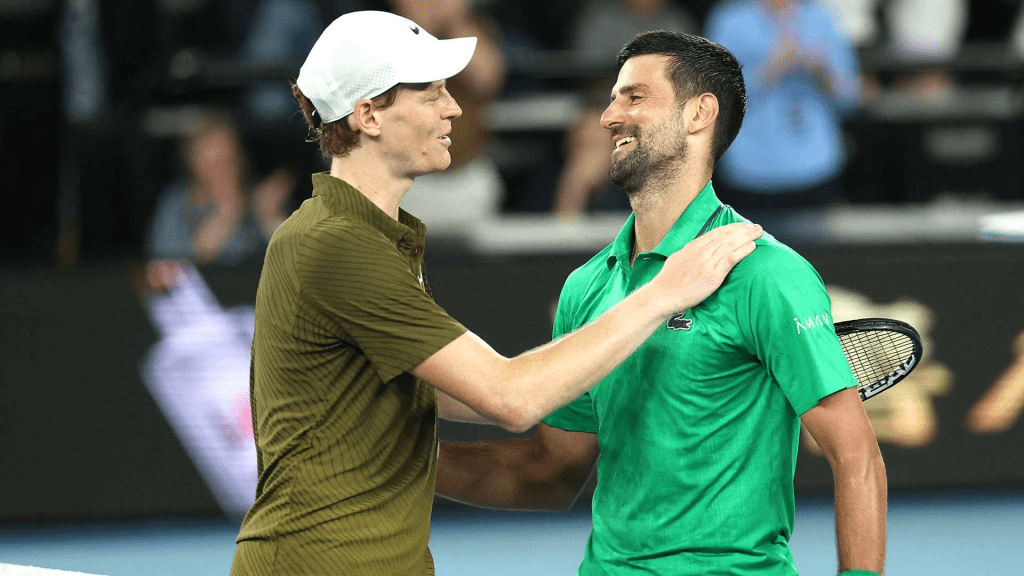
“I feel like I have already won the tournament” was what Novak Djokovic said when the 38-year-old outlasted 24-year-old Jannik Sinner in a 5-set semifinal.
Given the circumstances, he was probably justified to feel that way even though he was not in fact the final man standing. Prior to the match, he had not been expected to win a single set by observers. Two-time defending champion Sinner had beaten Djokovic the previous 5 times they met, dropping two sets in total, and was coming off a 20-match win streak. In his quarterfinal match, Djokovic had trailed by two sets to Lorenzo Musetti, someone he had a 10-1 record against, only to be saved by Musetti’s walkover due to injury. Ironically, the greatest player of the sport walked into Rod Laver Arena as the David in a David vs. Goliath matchup.
In set one, naysayers were proven right as Sinner broke Djokovic once to secure a comfortable 6-3 set. In set two to four though, something changed. Sinner let his serve weaken just a little bit. Djokovic hit his forehand just a little flatter, just a little harder. A rushed Sinner folded in the fourth game of the second set and the first game of the fourth, and that was that. Somehow, the old man had dragged Sinner into the fifth set of a Grand Slam match in the big 2026, 3 years after he had last done so.
Set five was a microcosm of the match and will be very familiar to those who have watched Federer vs Djokovic matches. Like Federer, Sinner was pressuring Djokovic’s serve and gained break points on 8 separate occasions. Yet, the Djokovic who fired aces and blasted forehand winners on demand under pressure was back. Sinner did not convert a single break point. Maybe feeling a little mental fatigue, Sinner let 3 points slip from him from a 40-15 lead in the seventh game, giving Djokovic a single break point, which would be the only break point Djokovic generated in that whole set. Djokovic caught the baseline with his return, and Sinner, feeling pressured, sent a forehand wide a couple of shots after that. And despite some valiant efforts from Sinner, the match was over, UCC collectively exhaled, and David had beaten Goliath in one of the greatest sporting moments of the 21st century. Statistics showed despite losing 12 more points, Djokovic saved 16 of 18 break points and won the long rallies.
Is this sustainable? Probably not. Djokovic’s level dipped significantly a set into the next match and never recovered, costing him his 25th Grand Slam title. But Djokovic displayed the extreme tenacity and the tactical wisdom a generational athlete like him has. He showed us how far persevering against adversity can bring someone even if they are physically limited. If 2026 was his final Australian Open, he went out in one of the best ways possible.
A Noticeable Gap Between Alcaraz and Sinner Emerged
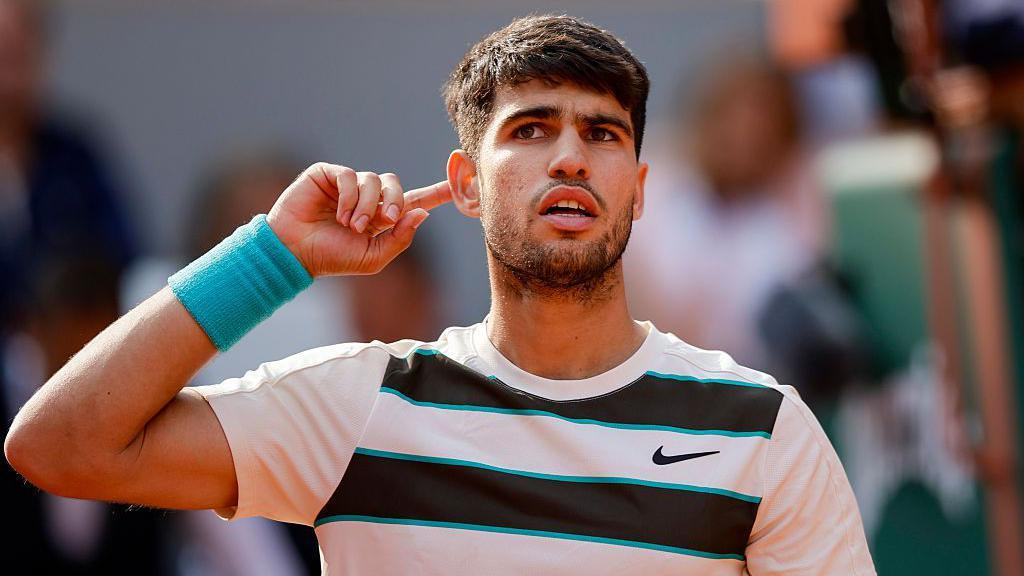
With Alexander Zverev leading 5-3 in the fifth set of the semifinals, Carlos Alcaraz seemed as lost as Sinner was. Instead, he just decided to win 4 games in a row. This is not a fluke but a pattern. Of 16 five-set matches played, he has won 15, including all three played against Sinner and the Wimbledon 2023 final against Djokovic. He has had to play a five-set match in 6 of the 7 Grand Slams he has won. By contrast, Sinner only won 6 of the 17 five-set matches he had played, and none above 3 hours and 50 minutes.
This gap between the two best tennis players of the present can certainly be attributed to conditioning. Because of upbringing and genetics (red-haired people have the MC1R genetic mutation that reduces heat tolerance), Sinner has been struggling in the heat far more than Alcaraz. Not all of it though, because Sinner was quite close to winning in many of the five-set matches, wasting 3 match points in the 2025 French Open Final for example. It just seems like Sinner’s tactical decision-making suddenly drops a level after a certain time in a match, and it is causing him to lose many important matches, especially to Carlos Alcaraz, his exceptionally fit rival. Until Sinner improves his conditioning further, Alcaraz will have an edge in their budding rivalry.
A New Generation of Young ATP Players Rise
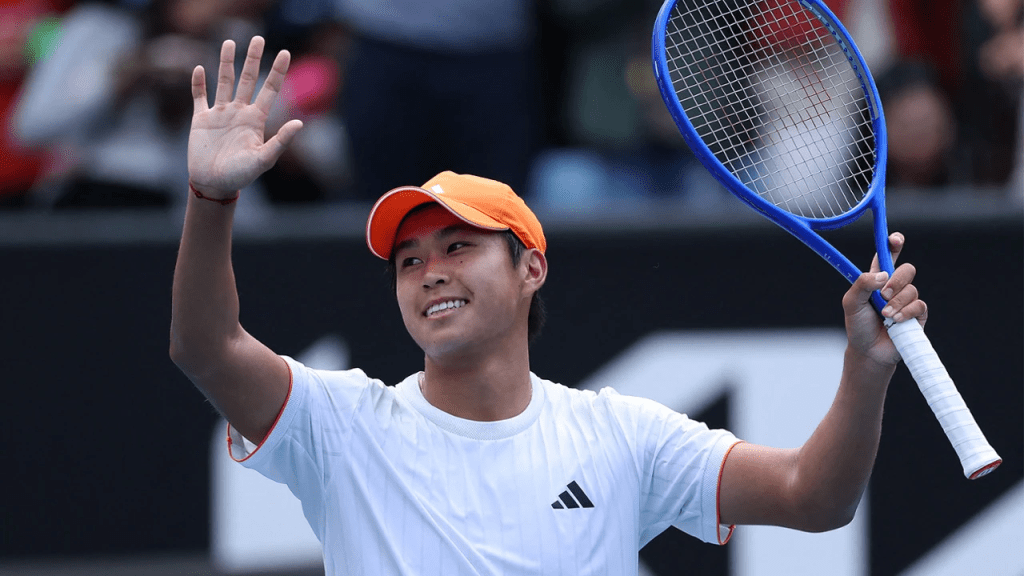
A new crop of players has emerged in the 2026 Australian Open. Foremost among them is Learner Tien, who reached his first Grand Slam quarterfinal at the age of 20 and is on the brink of breaking into the Top 20. While Tien is one of the worst servers on the tour, his endurance and accuracy are exceptional, which contributed to this run and beating 5 Top 10 players in 2025. He is coached by Michael Chang, the best Asian men’s tennis player of all time, and like his coach, he will inspire many Asian-American tennis players. He is one of my favourites personally, and I wish him the most success. Has to have a better serve, though.
Other newcomers to the tour, mostly from college tennis, are making an impact too. Eliot Spizzirri, an ITA all-American, took a set and almost a second one against Jannik Sinner in the third round. Michael Zheng, still studying psychology at Columbia, beat a Top 20 player in Sebastian Korda. Ethan Quinn, a double NCAA champion, defeated former Top 10 player Hubert Hurkacz, who was in red-hot form. Rafael Jodar, a 19-year-old prodigy from UVA, made the second round from qualifying. This is a testament to the US college system’s strength in producing athletes outside of the famed college football system. One can only envy the life choice they have to make: take an Ivy degree or millions in prize money?
Aryna Sabalenka’s Finals Troubles
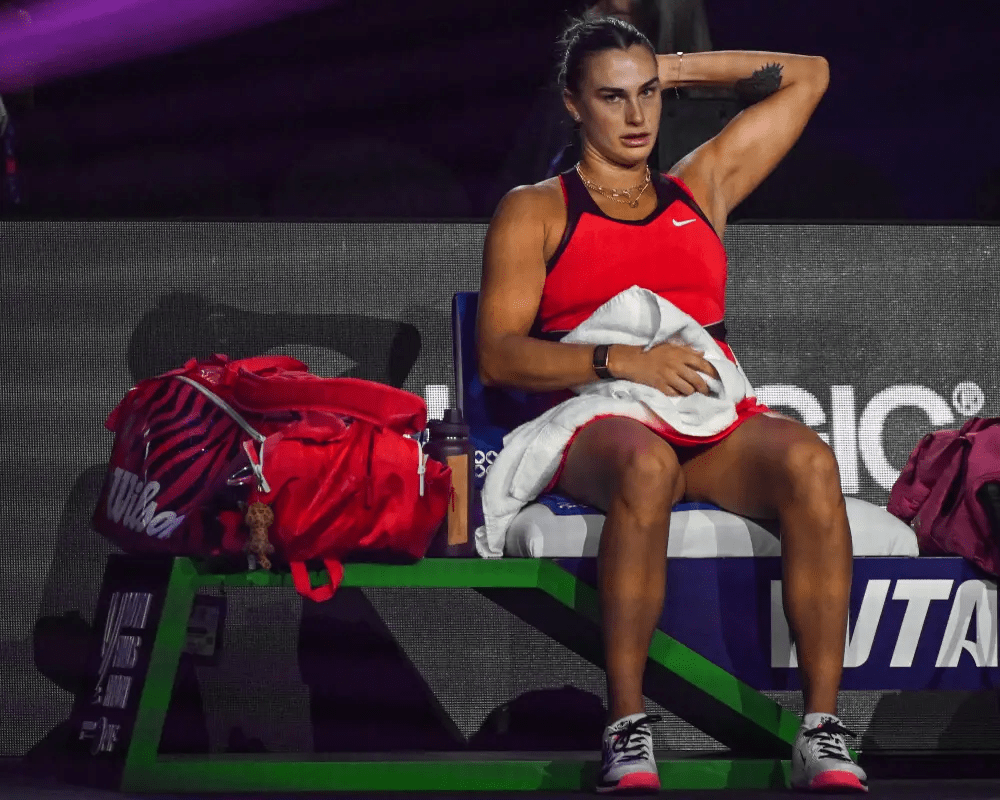
The clear World No. 1 in the women’s circuit right now is Aryna Sabalenka. If you do not know her from her incredible consistency, you will know her from her 113-decibel grunt louder than a car horn. Jokes aside, she has lost 3 of the 4 Grand Slam finals she has played in, including this year’s Australian Open final, despite her otherwise totally dominant record. In this final, she lost 6 of the next 7 games from 3-0 up in the third set, including 5 straight games, to ultimately lose that set and the match to Elena Rybakina.
Why has this pattern of losing in the big moments formed? Of course, her thought process is something only she knows. What this article can provide are general reasons why professional sports players choke under pressure. One reason is a rogue prefrontal cortex. Generally, the prefrontal cortex helps people focus. However, it often hyper-fixates on certain areas during high-pressure moments, leading to collapse by over-analysis. In a very technical and low-margin sport like tennis, this is fatal even if temporary. Another reason is the human fight-or-flight response triggered by high pressure, which reduces human memory capacity and increases flashbacks to negative experiences. Perhaps Sabalenka was thinking of her atrocious performance in last year’s final in this year’s final as well. Feasibly, she can fix her issues with scientifically proven practice routines and overcome her mental issues. Whether that happens is still in doubt.
Victoria Mboko May Soon Be A National Icon
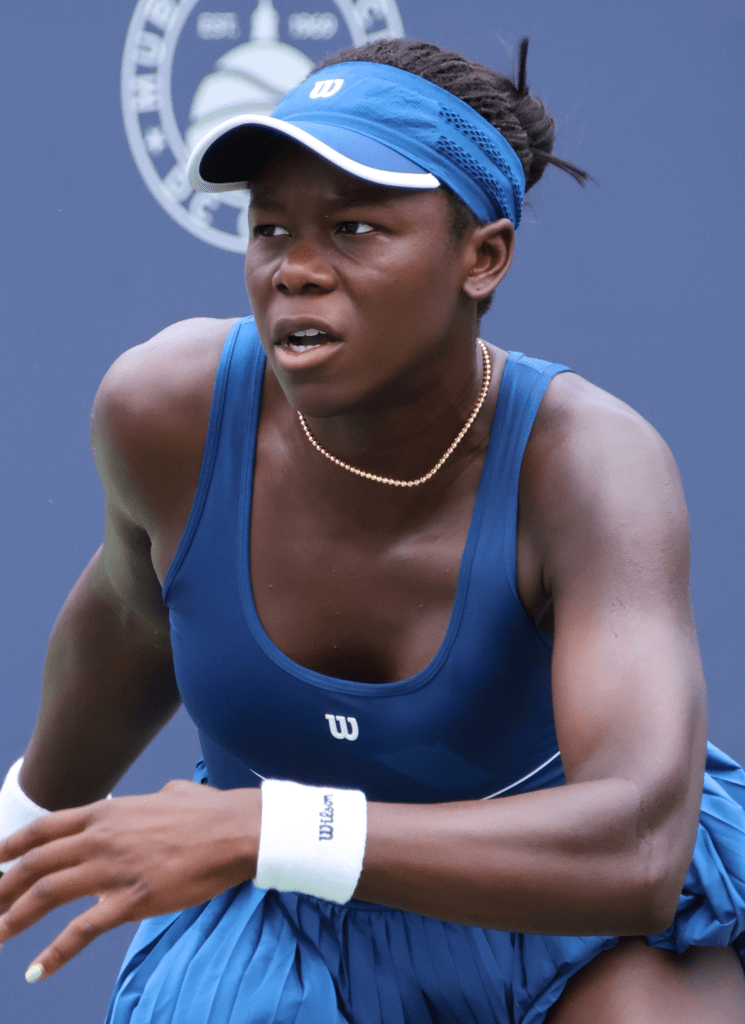
Remember her name. After Milos Raonic, Bianca Andreescu, Félix Auger-Aliassime, and Denis Shapovalov, another Canadian prodigy rises. At the same time last year, she was ranked 350 in the world. Then, almost out of the blue, she captured the Masters title at Montreal, defeating top players such as Coco Gauff, Elena Rybakina, and Naomi Osaka along the way. This Australian Open marked her first Round-of-16 appearance at a Grand Slam, pushing her closer to a debut in the Top 10 (Update: after a deep run in the next tournament, the Qatar Open, she will be in the Top 10).
Her game is defined by a powerful serve and big groundstrokes. High endurance is also a defining trait of her game. In her winning run in Montreal, she came back from a set down on three different occasions. Those traits have helped her plow through weaker opponents and fight back against players of the very top. Those qualities actually showed in her loss against Sabalenka. Despite being destroyed 1-6 in the first set and trailing 1-4 in the second, Mboko figured something out, saved 4 match points, and forced the second set to a tiebreak before ultimately losing there. The next step is raising her level so that she can consistently beat the very top and contend for Grand Slams. She is only 19, so she will only get smarter, stronger, and fitter every year. Perhaps the one big concern with Mboko is injury. She has struggled with, but overcome, major wrist and knee injuries. It is important for Mboko to optimize her practice routine and techniques for avoiding major injuries because the four other Canadian prodigies listed all spent years in the wilderness due to chronic injuries.
The Maple Leafs will probably not win a Stanley Cup until 2067, but in the meantime, the Burlington resident could provide us with some sporting success stories. We will hopefully be able to see her compete in Toronto this year and for many years to come.





 The Blue and White
You must be logged in to post a comment.