
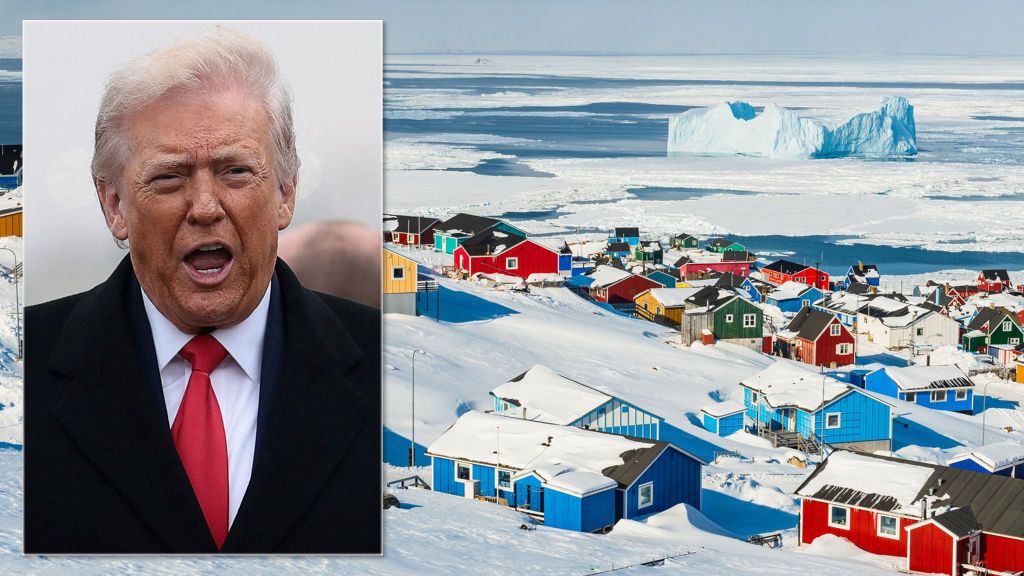
The topic of Greenland’s autonomy as a part of Denmark has been one of, if not the hottest story in the global community for the better part of the last month, due to the Trump administration’s interest in acquiring the arctic territory. While this isn’t the first time an American president has offered to acquire Greenland, the USA is coming off a successful operation in the removal of Venezuelan president Nicolás Maduro, showing that this administration is fully prepared to deploy military force to achieve their interests.
Greenland has formally been a part of the Kingdom of Denmark since 1814, with the Treaty of Kiel designating the territories of Greenland, Iceland, and the Faroe Islands to Denmark while Norway was ceded to the Kingdom of Sweden. The treaty came at the end of the Napoleonic Wars, with draconian terms for the union of Denmark and Norway due to their allyship with Napoleon’s French Empire. You can read more about the union of Denmark and Norway here, and the treaty of Kiel here.
President Trump’s efforts to try and acquire Greenland are not the first by a US administration – the Truman administration tried to buy the island in 1946 for $100 million dollars in gold at the start of the cold war. Truman believed that acquiring Greenland would be a strategic advantage for the United States, preventing the USSR from establishing a substantial presence in the Arctic while also putting the US in a better position militarily to defend from a possible Soviet offensive. During a meeting between then Secretary of State John Byrnes and Danish foreign minister Gustav Rasmussen, the proposal was formally put forward. However, Denmark rejected the offer and the matter of Greenland’s purchase was largely put to rest until 2019, where Trump’s first presidential term showed his intentions to buy Greenland. He referred to it then as “essentially a large real-estate deal”. The prime minister of Denmark, Mette Frederiksen, suggested the idea was “absurd”.
On the 7th of January 2026, The White House released a statement saying that President Trump and his advisors have been discussing a number of options for acquiring Greenland, including “utilising the US military”, sparking concern around the international community. The proposed annexation of Greenland by force would threaten the existence of NATO (North Atlantic Treaty Organization), a transatlantic alliance between The US, Canada, and 30 European nations. Both the Kingdom of Denmark and the United States are in NATO, and aggression from one ally to another would mean that NATO’s legitimacy as an organization would disintegrate. Leaders of several European countries have expressed concerns with the United States’ plans for Greenland, including the leaders of the UK, Germany, France, Poland, Spain, Italy, and Denmark. Their statement reads:
“Arctic security remains a key priority for Europe and it is critical for international and transatlantic security. NATO has made clear that the Arctic region is a priority and European Allies are stepping up. We and many other Allies have increased our presence, activities and investments, to keep the Arctic safe and to deter adversaries. The Kingdom of Denmark – including Greenland – is part of NATO.
Security in the Arctic must therefore be achieved collectively, in conjunction with NATO allies including the United States, by upholding the principles of the UN Charter, including sovereignty, territorial integrity and the inviolability of borders. These are universal principles, and we will not stop defending them.
The United States is an essential partner in this endeavour, as a NATO ally and through the defence agreement between the Kingdom of Denmark and the United States of 1951.
Greenland belongs to its people. It is for Denmark and Greenland, and them only, to decide on matters concerning Denmark and Greenland.”
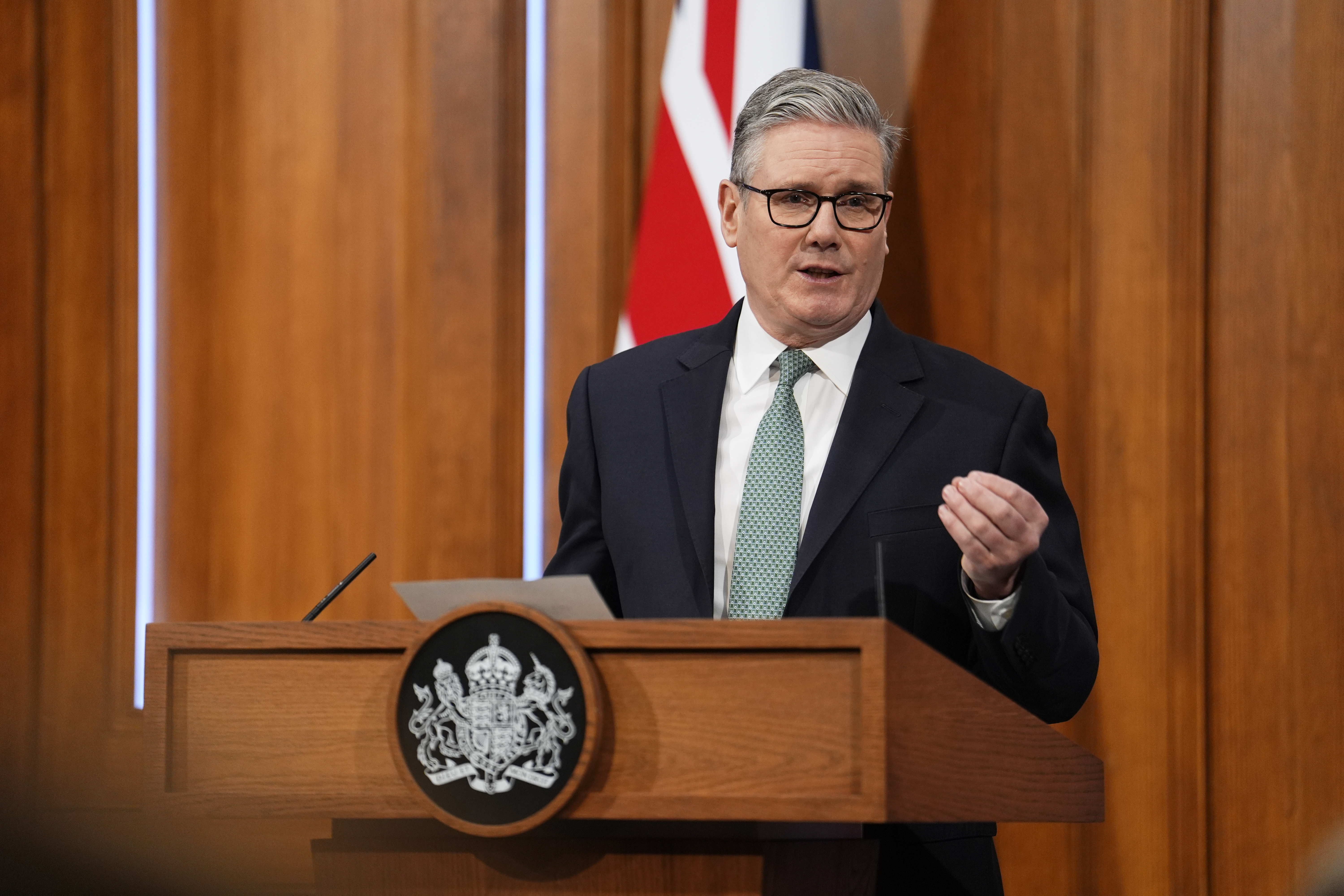
UK Prime Minister Keir Starmer delivers a statement on the UK’s stance regarding Greenland’s sovereignty (Global News)
The question has to be raised as to why President Trump is willing to threaten NATO with a trade war just to achieve his intentions for Greenland. The President has stated that he believes the US acquisition of Greenland is essential to “deter (US) adversaries in the arctic region”. Trump has also stated that the US needs to “take Greenland”, otherwise Russia or China would. However, the Kremlin has stated that it recognizes Greenland as Danish territory along with China’s foreign ministry, stating that “the US should not pursue its own interests by using other countries as a pretext”. While the Trump administration has only designated acquiring Greenland as a matter of US National Security, the island possesses significant rare earth minerals as well as possible oil and gas reserves that would become more accessible due to significant ice-melt as a result of climate change.
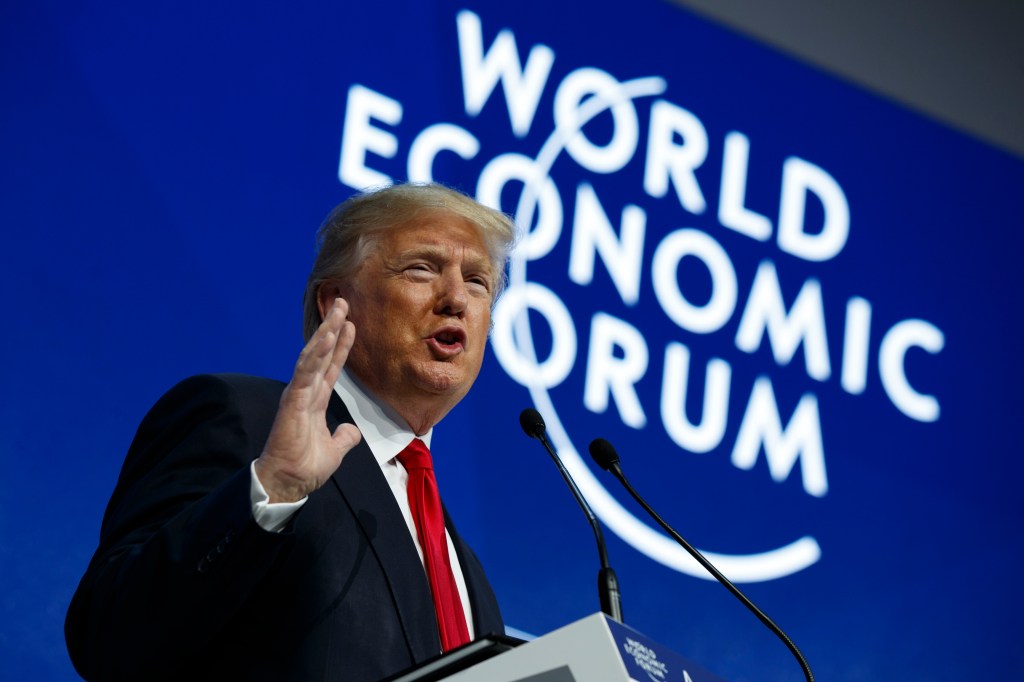
During a recent speech at the World Economic Forum, Donald Trump officially stated that he “would not use force” to take Greenland, while also criticizing NATO for not being able to fulfill “a very small ask” from the United States. Trump also turned around on his proposed 10% tariff on certain NATO members, having held discussions with NATO secretary general Mark Rutte to “form the framework of a deal with respect to Greenland”. With this announcement, the direct threat of military force has largely departed the thoughts of the global community. However, the issue of Greenland has moved far beyond a territorial dispute: it has become a serious test for international order in the 21st century. For the Trump administration, the acquisition is a matter of strategic significance: a move to secure the Western Hemisphere’s northern territories against Russian and Chinese interests. For Copenhagen and the rest of NATO, it is a non-negotiable stand for sovereignty. As tensions rise between Europe and the USA, this era of global diplomacy may be coming to a close.






 The Blue and White
You must be logged in to post a comment.