
Many of us might associate climate change with political rhetoric and faraway natural disasters. This association is correct, but not complete. The effects of climate change are evident almost everywhere, and one of those is professional sport. Of the professional sports, tennis is one of the worst affected.
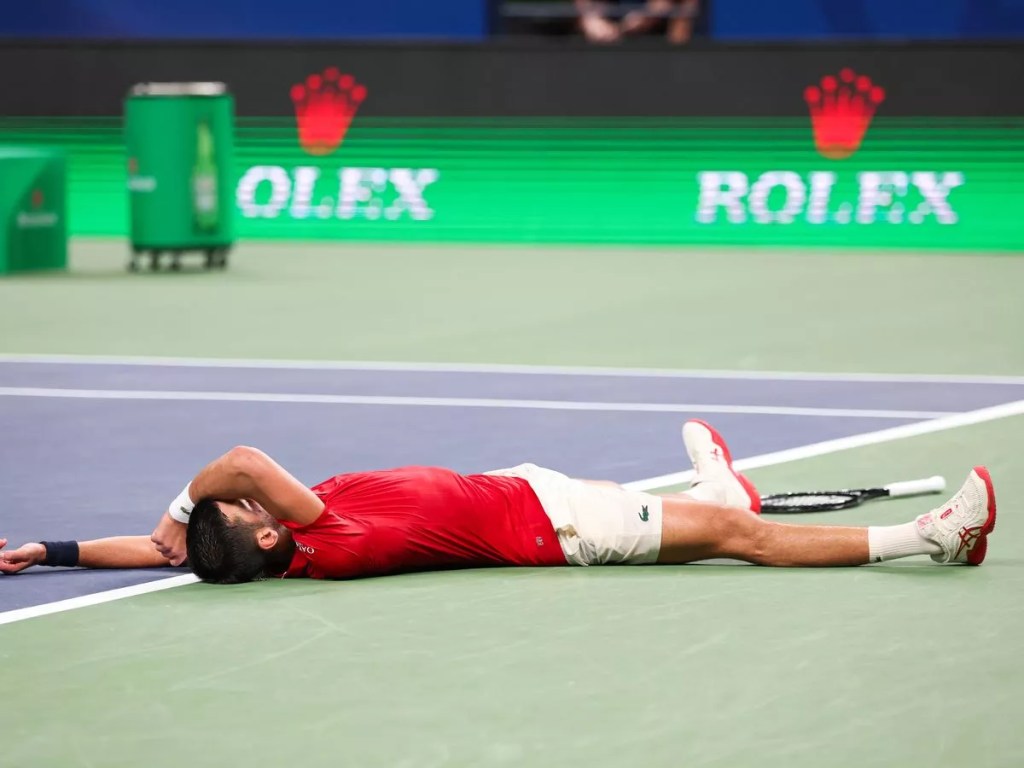
At the most recent major event, the Shanghai Masters, Jannik Sinner was seen limping in agony before retiring from his match, while Argentine Francisco Comesaña fainted (!) during his first round match. In that tournament, there were 7 retirements, not counting Comesaña fainting, Djokovic puking twice, and two withdrawals. Most of those events occurred due to heat.
It affects spectators as well. In Wimbledon, an assortment of stars, including Carlos Alcaraz, Taylor Fritz, Aryna Sabalenka, and Iga Swiatek, had to interrupt their matches to provide help to fainting fans. Alcaraz had to do it more than once.

So how does climate change tie into all of this? There are really three reasons.
1. The Schedule – Unbearable
The tennis schedule is quite old, with its basic structure formed from the 1960s to the 1990s. At the time, the heat was bearable in most venues, so the dominant philosophy was “chasing the sun”. As a result, most tournaments (including all 4 grand slams) are played either during the summer or just around it. However, due to climate change, summers are much longer and hotter than the tennis schedule was designed for. Three things happen. First, some players, especially top players everyone wants to watch, outright withdraw from summer tournaments. The Canadian Open is actually one of the largest victims of this, since it is just after Wimbledon and in the middle of the summer. This year and last year, none of Djokovic, Alcaraz, or Sinner bothered to go even when it is a mandatory event. Two, the players who do play through those tournaments play badly and suffer badly (e.g. vomiting, shortness of breath, heat stroke, fainting). Lastly, fans can’t bear the conditions either and don’t come to watch. In 2018, Milos Raonic, who is indisputably Canada’s greatest men’s tennis player, played in Sobeys Stadium with only 200 people watching due to a heat wave.
2. Tennis Regulations Can’t Keep Up.
As summers get hotter and heatwaves occur more often, regulations should keep up. Some sports leagues do have regulations. The MLS, for example, does not start matches if the WBGT index exceeds 33.5 Cº and institutes mandatory breaks at WBGT 28 Cº. (The WBGT index is a weather index used for sports that combines temperature, humidity, and some other variables. 30 Cº WBGT is around the threshold for danger). Some tennis tournaments also have this type of regulation. For example, all women’s tournaments allow a 10-minute break between the second and third sets if the WBGT exceeds 30 Cº and suspend play if the WBGT exceeds 32 Cº. All Grand Slams also have a version of heat regulation. For some reason though, men’s tournaments outside of Grand Slams do not have any heat regulations, which led to the incident described above of players fainting in the Shanghai Masters, and possibly many more unreported incidents in the minor leagues of tennis.
3. Tournament Organizers
Tennis is organized by tournament, and capabilities vary significantly per tournament. Grand Slams have the power to essentially do whatever they want because they have almost infinite money and time. This allows them to delay matches for heat reasons and close the roof on stadiums if they so wished. This does not apply for smaller tournaments. Many smaller tournaments are crammed in between major ones, so they cannot run even slightly behind schedule. Therefore, they are forced to put some players onto the court during the day, in unbearable weather conditions. Those tournaments also do not have the resources to build heat-reducing accommodations such as a retractable roof. For example, a Tennis Canada proposal to add a retractable roof to Montreal’s IGA Stadium was not pursued seriously due to the $70 million estimated cost.
What should tennis do?
One, the different governing authorities of tennis should implement a heat policy covering every player and every spectator, regardless of tournament and gender, as soon as possible. Some players and spectators have already come close to dying and it is reasonable to suggest that if something is not done, one of them will. This sentiment has been echoed by many players on both the men’s and women’s circuits, including former men’s World No.4 Holger Rune, who asked during a heat-induced medical timeout: “Why doesn’t the ATP [men’s tennis association] have a heat rule? You want a player to die on the court?” The answer to the second question should be a resounding “No”.
Two, even if the schedule cannot be revamped in a major way, tournaments should not be scheduled on the hottest days of the year. For example, the entire section of the calendar from post-Wimbledon to the US Open could be pushed back by a week to avoid peak summer temperatures. Barring that, buffer days should at least be increased between summer tournaments to accommodate for potential heat delays.
Three, the concerns of players should be heard at the very least. Top tennis players are supermen and superwomen physically. When even they are complaining about how demanding the tennis schedule is and how dangerous the conditions are, the sport can’t ignore their opinions.
That concludes the article. I hope you had fun reading this article and perhaps learned something new as well. Thanks for reading!






 The Blue and White
You must be logged in to post a comment.