

Abstract
ESG has been a vehicle for incentivizing businesses around the world to make considerable contributions to the global challenges, including those indicated in the United Nations Sustainable Development Goals, for almost two decades. In the business markets everywhere, including Canada, ESG assets and ESG-driven investments have been rapidly growing (Poyser, A., & Daugaard, D. 2023). ESG efforts are also being criticized for greenwashing practices, lack of transparency, and poor data quality. By examining the integration of ESG in Canadian indigenous communities, this Research Project proposes implications and the current state of ESG integration in Canada’s indigenous communities based on some of the most relevant dynamics around ESG. In order to achieve the project’s goals, primary and secondary research methods were combined with the principles of strategic foresight, and systems thinking. A participatory design methodology and unstructured interviews were used to collect primary data for this study. Additionally, secondary data was collected through literature reviews, and other research methods to execute this research study. This paper is intended to assist investors in learning how to better integrate ESG data into their analysis as well as their investment decisions.
Keywords: ESG, Indigenous communities, Canada, Sustainable finance.
Introduction
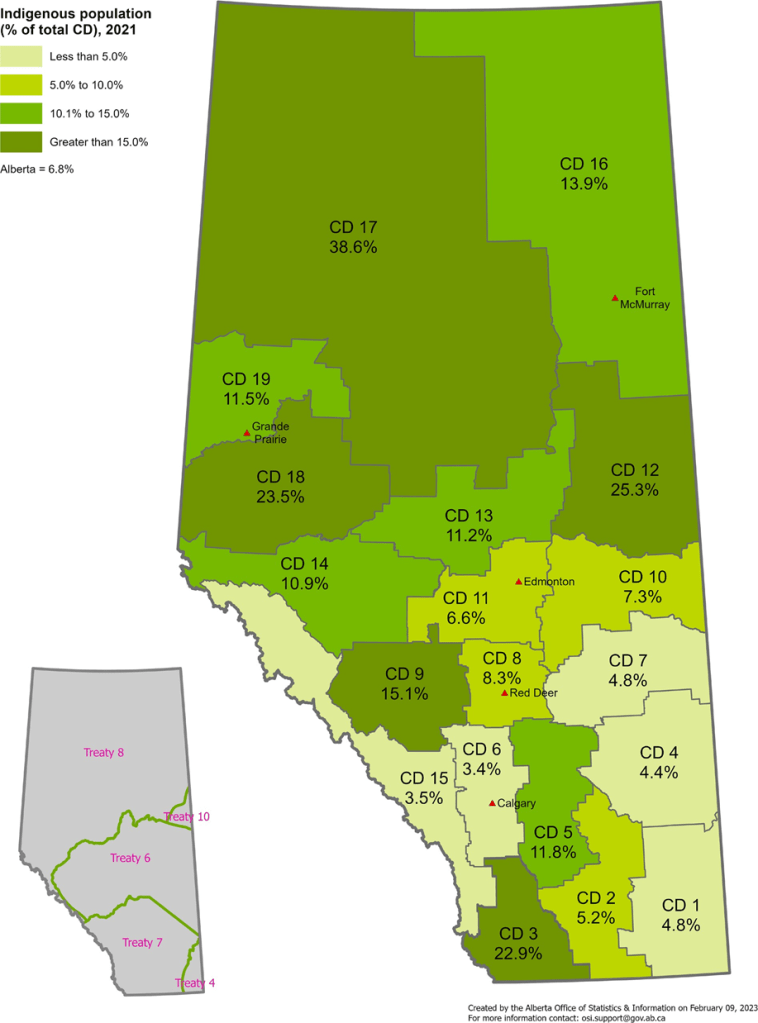
According to the 2021 Census, 1,807,250 Indigenous people comprised 5.0% of Canada’s population. As the third-largest province after Ontario and British Columbia, Alberta is home to 294,210 Indigenous people.
By analyzing environmental, social, and governance issues that are material for a market, ESG integration can reveal risks and opportunities (Poyser, A., & Daugaard, D. 2023).
Economic interests must be balanced with Indigenous rights, including traditional knowledge, land rights, and self-determination. The Canada’s unique social, cultural, and environmental fabric can be preserved by involving Indigenous communities in decision making. Understanding and addressing environmental challenges in the Canada require Indigenous Knowledge. In recent years, scholars have argued in favor of the critical recognition of Indigenous Knowledge as a distinct knowledge system characterized by its unique methodologies, validation processes, and scope. By embracing sustainable practices, indigenous communities can minimize the impact on the environment, improve quality of life for community members, and ensure the well-being of future generations (Poyser, A., & Daugaard, D. 2023).
Based on the accumulated research, it is clear that businesses who pay attention to environmental, social, and governance issues do not find that they are hindered in creating value, quite the contrary is true. From a tilt and momentum perspective, it is very clear that companies that offer strong ESG propositions outperform their peers in terms of equity returns. Additionally, a higher performance in ESG correlates with a reduction in the downside risk in addition to reduced spreads on loans and credit default swaps, and higher credit ratings (Middleton, A. 2023).
However, while ESG propositions become more compelling, we are still less clear as to how they relate to value creation for indigenous communities. What are the benefits of an ESG proposition from a financial perspective? According to our research and experience, ESG impacts community building in five important ways: (1) promoting top-line growth, (2) cutting costs, (3) minimizing regulatory and legal interventions, (4) increasing the employee productivity, and (5) optimizing capital expenditures and investments. An understanding of the “softer,” more personal dynamics needed to accomplish the heaviest lifting of the levers should also be part of a leader’s mental checklist when approaching ESG options (Pelosi, N., & Adamson, R. 2016).
Furthermore, this research examined the sustainability performance of community and community development associations using ESG principles as the organizational philosophy. Because the environment (E) principle entails individual measures for protecting the environment, the society (S) principle emphasizes social diversification and the evolution of circumstances, and the governance (G) principle emphasizes fair, open, and transparent governance through the disclosure of information. The current generation of indigenous communities and community development associations has also done their best to elaborate their economic and industrial development instead of their original social responsibilities (Middleton, A. 2023) for a long time, paying more attention to profits and earnings per share (EPS) than their duty.
In conclusion, integrating ESG into indigenous communities presents both challenges and opportunities. By increasing education and awareness, developing partnerships and collaboration, and implementing sustainable practices, indigenous communities can harness the benefits of ESG and position themselves for greener pastures in the future (Machado, J. 2023).






 The Blue and White
You must be logged in to post a comment.